Although the Virginia General Assembly 2019 session was very
active including passing several bills that can be described as positive for
the commonwealth, there were also a couple important misses. The bills passed must yet either be signed by
the governor or survive veto challenges.
The most important of these is the new budget. The budget had to address the thorny issue of federal tax conformity. What was approved, for the most part, was in the best interest of the commonwealth. Most importantly it achieved the goal of ensuring the governor wasn’t allowed to abscond with a billion-dollar tax increase, that he would have spent primarily on wealth transfer programs, and returned the majority of the unintended tax increase to the taxpayers. In fairness some social programs, much desired by the left, were funded in negotiations with the Democrats. Notable among several other accomplishments of the session is a pilot program to address homelessness at its core by preventing evictions. This could have a backfiring effect in that those wishing to rent their properties will be more risk adverse in selecting potential renters. Homelessness is an ever present and growing problem where remedies for those at risk, and in need of some support to return to regular rent payments, should be made available.
Ranking high on the list of importance was addressing the
issue of redistricting and the legacy of gerrymandering in the state. Efforts to place the 2020 census
redistricting responsibility in the hands of an independent commission appears
reasonable and in line with efforts in other states. Commissions will be as imperfect as the human
beings who inhabit them. But something
had to be done to bring greater fairness back to representation for all
citizens as intended by our founding fathers.
Now to a couple misses that were just so puzzling.
First and foremost among these is the failure to outlaw handheld mobile phone calls while driving a motor vehicle. For all of us who have suffered foolish distracted drivers while holding a mobile phone to their ear, this is the biggest no-brainer of the decade. Handsfree, Bluetooth calls should be allowed but still can be distracting. A kissing cousin to texting (already outlawed), the use of a mobile phone by drivers to do anything requiring use of a keypad (other than handsfree use of a mapping/directional application) should also be made illegal.
The second failure in my mind, certainly not a no-brainer
but loaded with commonsense, was the failure to decriminalize the use of marijuana. Authorizing recreational use may be a “bridge
too far” at this point in Virginia, although there are many sound reasons to
consider this in the near future. But to
create criminality in those who are not doing anything different than what is
possible with alcoholic beverages defies logic.
Over crowded jails and prisons, providing informal schools of
criminality for fresh inmates whose only crime was marijuana use, just exacerbates
the troubles with the already overburdened criminal justice system.
Finally, a mention of disappointment in the retention of the
Pease limitation1 on tax deductions for high earning taxpayers. Eliminated in the new federal tax code,
Virginia’s attempt at federal conformity conveniently failed to eliminate the
Pease limitation. Those who believe high
earning families should pay taxes at a significantly higher rate will cheer
this disparity with the federal tax code.
The charitable organizations who rely on large contributions from these
same families may not.
1It works
by reducing the value of a taxpayer’s itemized deductions by 3 percent for
every dollar of taxable income above a certain threshold ($254,200 single;
$305,050 married). The phase-out of the value of itemized deductions is capped
at 80 percent of the total value of itemized deductions. Due to its structure,
Pease is not really a limitation on itemized deductions, but rather a stealth
surtax on high-income individuals.1https://www.bing.com/search?q=pease+tax&qs=HS&pq=pease&sc=8-5&cvid=1AF0672E650C4D1097DD1B75D00F426C&FORM=QBLH&sp=1
taxfoundation.org/pease-limitation-itemized-deductions-really-surtax
f
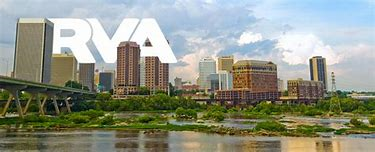
Over the past few years Richmond Virginia has and is experiencing a bit of a resurgence, even a renaissance. There are many factors that have played a role. The rapid, dynamic and exciting growth of Virginia Commonwealth University is clearly a major factor along with strong, rapidly expanding technology driven employers like Capital One and CARMAX. A broad attempt by the community to create an attractive environment for Millennials and Gen-Zers to live and work downtown. The creation of rapid growth and gentrification zones in the city like, Tobacco Row, Scott’s Addition and Manchester. Zones, created by forward thinking city leaders, that are attracting commercial, residential and dining/entertainment development.
A significant factor that has drawn national attention to
Richmond is the food scene. The quantity and quality of restaurant choices
has been a major contributor to Richmond consistently being named a Top Destination
for food travel. Here are a few other
recent bits of recognition for Richmond as a destination for many good reasons.
Southern Living Magazine names Richmond one of
the South’s Best Cities in 2017.
Realtor.com lists Richmond as one of the top ten
up-and-coming tech cities. in 2017.
Richmond is ranked the 24th best place to live
by U.S. News & World Report, February 2017.
Richmond named to ‘Best Places to Live and Work
as a Moviemaker, 2017’ by MovieMaker.
Richmond ranked a Top 10 City for Global Trade
in the United States by Global Trade Magazine, September 2016.
Richmond named one of 20 best places in America
to start a business by CNBC.com, August 2016.
Richmond named among America’s 50 best running
cities, by Runner’s World, August 2016.
Richmond named a top city for creatives, by
Thrillist, July 2016.
Richmond named a “top destination” for
food travel in 2016 by National Geographic.
Richmond named the 28th best place to live in
the U.S. by U.S. News & World Report. March 2016.
Richmond earns #3 ranking of “Best Places
to Travel in 2016” by Travel & Leisure, December 2015.
With many nationally recognized positive attributes, what is holding Richmond back from its full potential? For example, Richmond as a realistic contender for such honors as Amazon’s second headquarters city. Many of the blemishes are the result of the same affliction that affects so many of the world’s great cities; bloated, inefficient government. The problems impact both government services functions and the school system’s ability to produce top performing student populations. Both are high profile failures of decades of ineffective leadership. But visitors don’t see the root causes, they see the manifestations; crumbling infrastructure (roads and bridges are a complete embarrassment) and inadequate public transit.
So why must this be the case; why can’t they get it right? Two primary problems, inadequate revenues and
inefficiency.
Revenues are inadequate primarily due to a shrinking tax
base and low yields. The city benefits
in many ways by having state government and the rapidly expanding Virginia
Commonwealth University within the city limits.
But property taxes are not one of the benefits. This negatively impacts yields and requires
the city to impose higher tax rates on the remaining taxable property. It creates the perception the city imposes its
lack of sound fiscal management on its property owners. A tax rate nearly 40% high than surrounding
communities; essentially a tangible cost of “city living”.
Richmond city government is notorious for the perception of inefficient and ineffective city services. A recent example is a news report with local contractors complaining about delays and errors in acquiring permits. This one among a litany of historically consistent grievances in a wide-ranging list from leaf collection service to crime. But city leadership, all elected officials, must attempt to address the dichotomy of wishing to eliminate waste, so funds can be diverted to areas of great need, and the public perception of heartlessness in weeding out inefficiency; including eliminating positions that are also held by city voters. Many of these potentially disenfranchised city workers would be significantly challenged to find new comparable work. Attempts at gained efficiencies with deep personnel cuts can be carcinogenic to a politician’s future even though it may be the exact right thing to do for the greater good.
So, what will it take to break this cycle? It takes courageous city leadership. As painful as this prospect sounds, those who
chose to live in the city must do it with the understanding that they must do
the following.
A willingness to pay higher tax rates in order to mitigate the state government/VCU impact and fund improved infrastructure and schools
To elect city officials who will do what is necessary to wring out waste and bring greater efficiency to city government while balancing these efforts with the human impact
A top priority must be to reverse the increasing trend of failure in the results produced by the city school system – for the future of the city nothing is more important
Demand more from city departments to improve the effectiveness and efficiency in working with city procurement of goods and services while providing improved services to the public/businesses
Support community planners to bring more residential and commercial development into the city
As astute a politician as there may be in this state, Mayor Levar Stoney has courageously proposed just such a plan. May he find the level of success with his proposals necessary to put the city on a path of improving a devastatingly weak school system, equally poor infrastructure and the attractiveness of the city to outside interests of many varieties.
Like virtually anything else in this modern world of ours,
especially in the world of politics, the topic is complicated. Even in the most beautifully designed political
structure ever experienced by man, the relatively simple notion of one citizen
one vote, the citizen can become a pawn in a highly charged U.S. political
chess game. The game is fair
representation. Since all of us cannot
be present to cast a vote in every venue where official political action takes
place, we engage surrogates or, as we often call them, representatives. The U.S. Constitution calls out how that
system of representation will be structured.
Without getting into the particulars, the intent is fair representation.
So, as a citizen, how can you be certain that your
“representative” is voting as if it were you casting the vote? Well, simply, you cannot. Unless of course you live in a
representative’s respective district where that representative is elected by a
majority of like-minded voters in your district. And for many, many years you could, as a
citizen with the means to do so, reside in a district that reflected your
values. Those values would be guideposts
by which your elected representative should cast her vote on your behalf. There
have been, and continue to be, social engineering attempts made to bring
families into communities or districts, using affordable housing, in order to
primarily provide better educational opportunities. From a voting strength perspective the effect
was and is a bit dilutive for those citizens already struggling to be heard.
Gerrymandering, by whatever body was empowered to redraw
districts as a result of new census data, used methods like “cracking” or “packing”
among others to retain power for the incumbents. The empowered bodies efforts have been
largely successful for decades because the political voice of those it potentially
harmed was not strong enough to effect change.
“Cracking” involves spreading voters of a
particular type among many districts in order to deny them a sufficiently large
voting bloc in any particular district. Political parties in charge of redrawing
district lines may create more “Cracked” districts as a means of
retaining, and possibly even expanding, their legislative power. By “Cracking”
districts, a political party would be able to maintain, or gain, legislative
control by ensuring that the opposing party’s voters are not the majority in
specific districts.1
Conversely, “Packing” is to concentrate as many voters of one type into a single electoral district to reduce their influence in other districts.1 This is equally effective in maintaining a measure of control on how the electorate is represented.
These tactics are typically combined in some form, creating
a few “forfeit” seats for packed voters of one type in order to
secure more seats and greater representation for voters of another type. This
results in candidates of one party (the one responsible for the gerrymandering)
winning by small majorities in most of the districts, and another party winning
by a large majority in only a few of the districts.1
So how, in this world of wide-eyed, instantaneous
journalism, are these practices allowed to continue knowing full well it may
rob the system of the fairness it calls out as its mightiest principal? Regardless of mainstream media’s apparently lack
of zeal on the topic, the reality is it appears to be coming to an end.
Although it is with great certainty that “Redistricting Commissions” are full
of political appointees with their own clear-eyed view of what is fair, the
process of selection, at least in some states, appears to carry the torch of
fairness as far as it can go with flawed human beings involved. The result will
be, it seems, increased fairness.
“Fairness to whom?”, you might ask. Simply, power to those who have not had the
power to gerrymander themselves back into office. Stacking the deck in their personal favor or
their party’s favor. But more generally,
its purpose is positively affect the political impact of those in the minority
and those without the financial resources to win elections in today’s political
environment. Ostensibly taking the power from the legislature and putting it in
the hands of “independent” commissioners.
This new approach, combined with the relentless force of demographic change, will certainly hasten the path to larger liberal voting blocs across a broader array of districts. Great power will still be in the hands of a relatively few state and national leaders. Those leaders will emerge from the current stock of Millennials (as they already are on today’s political stage) and, later in the 2020s, Generation Z; both whose numbers are larger and more diverse than previous generations.
If this trend toward more independent redistricting continues
there’ll be no Gerry in Gerrymandering. In
fact, the term may go by the wayside of history as a forgotten problem in a forgotten
time. Something that was done in the
past. Until some other scheme to rig the system in one party’s favor or another
is stumbled upon.
In a couple previous posts, the topic of the declining levels
of public school student success, despite increased focus and funding, was presented. That possibly the system needs more accountability
than new funding. That bloated public
school administrations across the country are sapping the funds needed in the
classroom while producing many new programs that are apparently yielding no discernible
success. These failures are highlighted
in lower SOL performance, lower proficient reader percentages and lower
graduation rates.
Locally a ray of hope has made an appearance. The newly appointed Superintendent of Richmond
Virginia Public Schools is working closely with the elected School Board to
substantially reduce bloat in his administration. This rather than find budget cuts elsewhere that
would directly impact the quality of education at the classroom level. Cuts that would likely come from desperately
needy areas like building maintenance, new construction or classroom size.
For those about to lose their administrative positions we
must have sympathy. But welcome to the
real world where performance actually matters.
Time to reinvent yourself as there are plenty of unfilled positions in
the American workplace.
Hopefully this will signal just the beginning of a new era
of accountability in public education. Accountability that must also reach into the
classroom.
“Anger is a public epidemic in America” according to Jean
Kim, a psychiatrist for the Department of Health and Human Services and a
teacher at George Washington University.
Dr. Kim believes anger is also addictive and that outrage “gives us an
unhappy high we keep trying to replicate”. 1
Further referring to the Richmond Times Dispatch Editorial
piece “The joy of outrage”, this quote was used to lead off the piece.
It was a time when “angry words were about the only kind
anyone cared to use.” When people “seemed tired of the reasoning process. Instead of trying to convert one’s opponents,
it was simpler just to denounce them, no matter what unmeasured denunciation might
lead to.” Problems “were slipping beyond
hope of easy solution – sectional enmities, economic antagonism, varying
interpretations of the American dream, the tragic, unendurable race problem
itself.”1
That sounds like our own time. It is actually a quote from historian Bruce Catton’s
civil war book “This Hallowed Ground” first published in 1956. Some may say we are heading toward a similar
violent split. Civil unrest is occurring
daily around the world. Some are violent
protests against high taxes and the failure of socialism in France. Others the complete breakdown of civil order
in Haiti where the frustrations of worsening poverty persist despite billions
in aid from around the world.
Online magazine Quartz published a summarization of the
findings of Tufts faculty members Jeffrey Berry and Sarah Sobieraj, in their
book “The Outrage Industry”, complex issues are simplified to fit into a tweet or
a headline and the messages make us feel good, even while they make us mad. The simplification creates an illusion that
problems are easier to solve than they are, indeed that all problems would be
solved if only they (whoever they are) thought like us.1
Once activated, a recent Harvard study finds, “anger can
color people’s perceptions, form their decisions, and guide their behavior
while they remain angry” – here’s the good part – “regardless of whether the
decisions at hand are related to the source of their anger.”1
Are we not tiring of anger?
It is exhausting and brings virtually nothing to the table. It likely interferes with our ability to deal
with these complex, thorny problems logically and effectively. Given the voracity of the angry outbursts we
see and hear each day, whether on Facebook, in a tweet or on the “news”, it
takes self-awareness and restraint to set aside anger. To recognize it for what it is; a mostly profitless
emotional reaction to disturbing information.
We can do better……
1Richmond Times Dispatch Editorial titled “Anger
Management – The Joy of Outrage” February 18, 2019
“In the past it’s come and gone
I feel like I can’t go on without love”
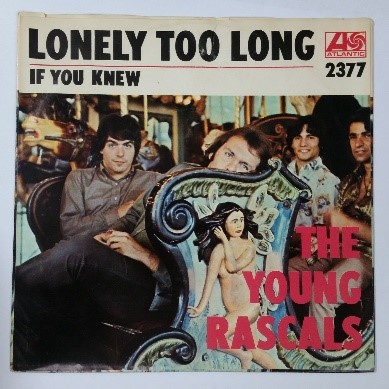
The Young Rascals – Lyrics from the 1960’s mega-hit “I’ve Been
Lonely Too Long”
Many Republicans across the country are feeling this way right about now. The lyrics from a true decades-old favorite further “I keep hopin’ with all my mind Everything gonna turn out right” – the numbers do not appear to bear out what Republicans keep hoping for.
The march of demographic change in America will leave its
mark on the political landscape in unquestionable ways. To deny it, would be an exercise in
self-delusion. China, with its
iron-fisted control of everything Chinese and beyond, can send Muslim
immigrants to “re-education camps” in a not-so-subtle effort to maintain
absolutism and preserve Chinese cultural integrity. Thanks to the wisdom of our founding fathers,
that sort of absolutism cannot happen here.
Or can it……. some may draw similar parallels to what it’s
like to be an impressionable young adult on American campuses today. The Young Republican gatherings are not
exactly bustin out of the campus meeting spaces. And good luck even having a conservative-minded
speaker to an open event on campus without massive and sometimes violent
protests. This is just one clearly well-functioning tenet in the Liberal operative
playbook. Effective as the “re-education
camps” in China without the whiff of brainwashing and absolutism.
The likely near-term future will present itself in strokes
of the liberal political operators’ paintbrush; some bold strokes but many ever
so subtle. Here, in the world’s most
successful cultural caldron of diversity and assimilation, a variable political
imbalance in favor of Liberals, that has endured with few exceptions for
centuries, is destined for long term significant increases in the ranks of voters
who associate themselves with social justice causes1.
The collective Liberal intelligencia know full well of, and
are very complicit in, the erosion of factory and mining jobs in this country. President Obama’s assertion that factory jobs
moved offshore are “gone for good”, and clean energy will shut down much of the
need for mining labor, rings the bell of meaningful change in the focus of
Liberal strategists and operatives. Helping
corporate leaders reduce cost at the expense of American workers (the height of
hypocrisy) has turned many of those leaders into stalwart Democrat party supporters
and, much more importantly, big campaign donors.
Seeing a substantial portion of their former working class
traditional blue-collar base becoming displaced and disenfranchised has led to
the full adoption and support of open borders (many prominent members of the
Democrat party in Congress supported strong border control for years with several
notable supporting votes (when it suited them politically). Open borders have already and will continue
to bring insurmountable millions to the liberal voting ranks. Additionally, based on recent polls, women
are opting for candidates leading with a social justice message1.
Thus, the near future will bring iron-fisted Liberal control
of both chambers of Congress, then the Presidency (and with that eventually the
Supreme Court). This will, without doubt,
pave the way for Euro-style socialism in less than a decade and the virtual societal
disappearance of the Judeo-Christian principals that guided our founding
fathers.
Candidate Trump’s outwitting of the Democrat party
leadership, by speaking directly to the working-class voters who felt abandoned
by President Obama and then insulted by Secretary Clinton, led to a single
anomalous event that will not be repeated.
Liberals believe that Trump is so beatable that they are streaming to
the federal election authorities by the dozens to make application for their
candidacy.
The undeniable logic of what is financially prudent and fiscally
possible, voiced by conservative political elements, will be drowned out by the
drumbeat of social injustice. The trend
in real numbers of vote-eligible citizens conditioned to the social justice
message, compared to those exposed to the truth of what makes the American
Capitalistic system function successfully, will forge a new, wholly unbalanced
electorate. These messages will be
reinforced daily by the main stream media networks aligned with Liberal causes.
Some among the immigrants will rise as small business owners
that will develop a clear understanding of how the system functions. Unfortunately, there will just not be enough
of them to materially alter the inevitable. Their voices will not even be
enough to prevent Liberals from crushing the spirit of small business owners
with huge tax burdens labeling them as “the rich”. All while accepting hundreds of millions in
campaign contributions from wealthy executives of large corporations and Hollywood
types.
So, if these assertions made here are close to correct, then
what? Well, you can take a good, hard
look at what is happening in Europe. The
French people, for example, have had many promises made to them about social
justice. The French workers have had it
pretty good for a few decades at the expense of the so-called “wealthy” (tax
surcharges for the “wealthy”, combined with typical income tax and social
program taxes, drive their total tax burden well in excess of 50% of income2).
35-hour work weeks, 12+ holidays a year plus most of August off, “free” healthcare,
“free” daycare in the schools starting at age 3 and a government pension that
promised a life style equal to that of their working life. Plus, “free” social programs for an adequate
safety net for the less fortunate.
In exchange huge “social system” taxes were levied plus a
substantial income tax. Even if the
French wanted to save for retirement, they truly could not. So most working-class French do not have any
savings to speak of. For most working-class
French citizens. their ability to save almost anything is made nearly
impossible as the massive tax burden, and the promise of “being taken care of”,
suppresses any desire strong enough to endure the sacrifice to save. And even if they had substantial savings the government
will only provide minimal (FDIC-like) protection against bank failure.
And now you see the clear evidence, from world-wide news sources, that the proverbial chicken is coming home to roost. The French economy is perpetually weak. Consequently, job growth and wage growth have suffered for years while the EU has allowed millions from the Middle East to “move in” to France and other EU member nations (open borders is constitutional for all EU nations and the main reason for Brexit). The economy is throttled by high taxes and other factors. So, tax revenues do not meet optimistic estimates and government costs rise exceeding revenues. Thus, taxes are raised and raised. Meanwhile, rising taxes and inflation are eating into the French paychecks and pension checks. To the point that the French people are VERY angry. Shared in previous posts, the working-class riots in France have shaken the nation and its government. The message is loud and clear; taxes are too high, and our government benefits do not meet their promise. The French government is in a vice-like conundrum. Yes Marie Antionette, you cannot have your cake and eat it too.
And it’s not just France – the British government-run,
single payer healthcare system is creeping into citizen’s refrigerators and individual
rights. “British officials just proposed
limiting the number of calories permitted in thousands of foods sold in restaurants
and grocery stores,” according to Sally C. Pipes’ column on December 14, 2018. If we allow government to gain full control of
the healthcare system in this country this sort of authoritarian, socialist
control of your food choices is right around the corner.
In the U.S., when Liberals are in full control of the federal
treasury as well as state governments, Liberal party members will march forward
with the social justice driven programs. Taxes will rise precipitously on the “wealthy”
(any household earning more than $150,000 per year according to President
Obama). But then that won’t be nearly
enough. The new “social system tax”, to
fund wide ranging social system benefits and payments, will be expanded (along
with means testing for those thought “too wealthy” to receive equal benefits) and
new taxes will be required of every taxpayer earning more than poverty level
incomes. Fold in a single payer, government-run healthcare system and other “social
justice” programs including welfare, healthcare, housing for new immigrant populations
(as a result of an open borders policy). The “payoff” for all these additional taxes will
be government saying it “will take care of you”.
The prophecy will be fulfilled, the conundrum achieved again,
this time here in America. A decade or
two down the road, when the weight of the taxes, the cost of housing, the
perpetual weak economy, rampant crime is in its full glory (especially after new
gun controls laws and no one except the criminals and terrorists have them), the
liberals will then have to deal with social unrest not unlike France, likely
worse. Millions riot in the streets with
hundreds killed and injured. The government
will cave by increasing benefits and raising taxes on the “wealthy” and
businesses. The economy will collapse
under the pressure….and the anarchists will have achieved their goal, the destruction
of the world’s greatest success story.
1Quoting from George Will’s column titled “Intelligent
Life in the Democratic Party” of January 3, 2019 – “The Economist, noting that Trump’s
approval rating is ‘stratified by age’, reports that baby boomers — those born
between 1946 and 1964 – who have been America’s largest cohort for more that
five decades will in 2019 be outnumbered by millennials, those born between 1981
and 1996. Boomers are – were; they are
shuffling off stage – almost 75% white; Millennials are 56% white. In this year’s mid-term elections, Democrats won
two thirds of voters ages 18 to 29 and 71% of millennial women.”
“Furthermore, the GOP, which thinks of itself as the redoubt
of the devout, is competing in an increasingly secular country. The Economist says that ‘Nones’ – people with
no religion – ‘already outnumber Catholics and mainline protestants,’ and in
2019 might outnumber evangelicals.”
“Furthermore, the New York Times reports that with the Democrat’s capture of New York’s 11th Congressional District, which includes Staten Island and part of Brooklyn, Republicans now hold no ‘truly urban’ district. Since Republicans lost four Orange County, California, seats in November – the Democrats only lost two seats nationally – there will be no Republican from there in Congress for the first time since 1940. And there will be no Republican from New England.”
Previous posts have decried the state of public primary and secondary education in this country as, well, trending from poor to worse. Poor reading scores for Virginia third graders released this fall further punctuates the point. Some examples from the report. Only 72% of third graders are proficient readers; down 3% from the previous year. In our fair City of Richmond only 53%, down 5%. So nearly half the third graders in the Richmond Public Schools are classified as poor reader. That is not the fault of the children. And obviously if they are poor readers at this level imagine how it will impact their ability to have success in the higher grades when the requirements and the stresses mount. According to the Richmond Times Dispatch editorial piece (and source of some of my statistics) on September 5th “the wasted lives and potential is inexcusable – especially because the problem has been festering for decades and continues to grow worse.”
Imagine where would we be if not for the SOL testing. Many in the educational system loth the system. I cannot help but think it is because it is exposing the public education system’s failures to the world. There are many reports of teachers “teaching to the test”. It seems reading proficiency is one that attempting to circumvent the testing system will not generate the desired false picture of educational achievement.
The system’s response is of course to ask for more funding. This is predictable and lacks substance. There are examples of public school districts being showered in extraordinary amounts of funding per student per year; Washington D.C. a prime example. Yet when compared to national averages, over several years, the results produced are abysmal. More money is not the answer.
The system needs accountability. Teachers and administrators compensation should be predicated primarily on academic achievement not tenure. The very best will earn more. This will attract more high achieving individuals to the profession. The “coasters” in the system will see declining income potential and lack of documented achievement leading to a forced exit. No teacher, especially at these young critical student ages where the fundamentals must be engrained successfully, should have a demonstrated record of underachievement and be allowed to continue.
All that being said, the entirety of the accountability for all these failures cannot be leveled exclusively against public system teachers and administrators. And private education possesses characteristics not found in the public setting. The socio-economic status of most families with students in private school is likely very different depending on the individual school or district. Clearly these families not only pay the tax dollars designated for public education but then pay substantially more for their child’s private education. With the attributes of higher socio-economic status, private school students typically have parents with a history of superior academic achievement. Those values often translate into more attentive parents who demand more from their child. The corollary is these parents also expect and demand more of the private school staff.
The trend in theses test results should be disturbing to everyone who desires future success for our great country. The way forward to improvement is complicated. But clearly some combination of increased use of lottery-based voucher system, to transition at risk students into a private setting, and establishing a pay for performance systems for public system teachers and administrators should be key principals of any plan.
The Cult of Fragility
Much as public school districts are in a financial choke-hold caused by ever-growing bureaucracies filled with staff whose value to the overall education mission is highly questionable; higher education is experiencing the same. Pulling excerpts from George Will’s recent column on Higher Education, he quotes Heather Mac Donald’s (of The Manhattan Institute) study. The Study has a range of 1997-98 to 2008/09, that, during this period of time, while University of California student population grew 33%, and tenure-tracked faculty grew 25%, senior administrators grew 125%. The ratio of “senior managers to professors climbed from 1 to 2.1 to nearly parity at 1 to `1.1”.
What is driving this massive “investment” in managerial overhead and driving up your child’s tuition? Again quoting Mr. Will’s column, “Writing last April in the Chronicle of Higher Education, Lyell Asher, professor of English at Lewis & Clark College, noted that ‘the kudzu-like growth of the administrative bureaucracy in higher education is partly a response to two principals now widely accepted on campuses: Anything that can be construed as bigotry and hatred should be so construed, and anything construed as such should be considered evidence of an epidemic. Often, Asher noted, a majority of the academic bureaucrats directly involved with students, from dorms to ‘bias response teams” to freshmen orientation (which often means political indoctrination), have graduate degrees not in academic disciplines but from education schools with ‘two mutually reinforcing characteristics’: ideological orthodoxy and low academic standards for degrees in vaporous subjects like ‘educational leadership’ or ‘higher education management’.
Further quoting Mr. Will’s column, “the problem is not anti-intellectualism but the ‘un-intellectualism’ of a growing cohort of persons who, lacking talents for or training in scholarship, find vocations in micromanaging student behavior in order to combat imagined threats to ‘social justice’……. Group think and political intimidation inevitably result from this ever-thickening layer of people with status anxieties because they are parasitic off institutions with scholarly purposes.”
“In her just published book ‘The Diversity Delusion: How Race and Gender Pandering Corrupt the University and Undermine Our Culture’ Mac Donald writes that many students have become what tort law practitioners call ‘eggshell plaintiffs,’ people who make a cult of fragility –being ‘triggered’ (i.e., traumatized) by this or that idea of speech. Asher correctly noted that the language of triggering ‘converts students into objects for the sake of rendering their reactions ‘objective,’ and by extension valid: A students triggered response is no more to be questioned than an apple falling downward or a spark flying upward.’ So the number of things not to be questioned multiplies.”
This is the portion of the piece I found to be just so remarkably disturbing. Again quoting Mr. Will’s column. “Students encouraged to feel fragile will learn to recoil from ‘microaggressions’ so micro that few can discern them. A University of California guide to microaggressions gave these examples of insensitive speech: ‘I believe the most qualified person should get the job’ and ‘Everyone can succeed in this society if they work hard enough.’ Fragile students are encouraged in ‘narcissistic victimhood’ by administrators whose vocation is to tend to the injured.” If someone is injured by these statements then God help them, and God help us all. Reading this makes me woozy in disbelief as if I were a character in a Ray Bradbury dystopian tale of a future where an all-powerful “authority” secretes systemic mind control herding societal lemmings devoid of individual thought.
Conversely, no one who holds the values of our founding fathers dear would want even implicit or thinly veiled bigotry or bias to insidiously turn young minds toward even a proton’s weight of acceptance of such destructive constructs. What is occurring within universities across the country, however, hints of a brown-shirted fascism that attempts to eradicate a young person’s ability to form individual value perspectives by instilling a singular dogmatic outlook. And if somehow a conservative-leaning speaker is booked to a university event, the left-wing radical elements of the student body and faculty hold sit ins, rallies and even violent protests to ensure the event doesn’t take place.
No one has yet mentioned the cost. Your child’s tuition costs are rising to unaffordable heights and clearly this is a key factor in increasing the cost of college without contributing anything to your child’s education. In fact, I am certain this additional value-less administrative burden negatively impacts the university’s ability to afford additional faculty, classrooms, modern equipment, and other implements of educational value.
You may wish to ponder that decision a bit more before you decide which candidates to support. I have mentioned previously my experiences in France. I find the French people, especially those in large urban areas, to be sullen and even morose. Not saying it isn’t a beautiful country with a fascinating history. And those living in the rural areas seem less burdened.
It’s a fantastic place to live if you are from Syria, or (French) Algiers or (French) Morocco. Well, maybe not even for them. It seems the native French are not big fans of the flood of immigrants; even though some speak their language. Even professionals from Africa and the Middle East struggle to find work in France, especially in the professions for which they are trained.
On a brighter note, there is a strong bond between our two nations. France came to our aid during the revolutionary war. Some say achieving American independence would have been far more difficult without substantial support from the French (and I am certain they enjoyed tweaking the Brit noses). We returned the favor in WWI and, just a few decades later, liberated France (along with other Allied nations) from the Nazis in WWII. Not to mention the financial aid we provided post war to help them rebuild. My focus here is more about its modern, post war history.
I have shared that it appeared there is labor strife almost every week in France with strikes, massive protests and frequent infrastructure breakdowns. In the past two weeks it was reported that one protestor was killed and 106 were injured in recent protests opposing rising fuel taxes. 90 were either “detained” or held for questioning. It seems the government of President Macron is trying to rid the country of fossil fuel use while many millions remain dependent on gas and diesel to travel to work or for their work. My observation is that the vast, vast majority of French citizens either ride motorcycles (they are everywhere in the thousands) or drive very fuel-efficient vehicles. There are quite a few larger luxury vehicles about, driven by the urban French elite; of which there are more than a few.
The protestors also complain of diminishing buying power. It seems wages are stagnant, opportunities are few and costs continue to rise within their slow growth economy. It also appears the government is attempting to amend the labor laws that allow workers to retire at 55 after working 35-hour weeks. It is no longer affordable the government claims. Quoting Robert Tichit, 67, among the protestors and a French retiree, as he referred to the president as “King Macron”. “We’ve had enough of it,” he said. “There are too many taxes in this country.”
In an AP report today, French police in the thousands used tear gas and water cannons to dislodge protestors from road blockades in central Paris where protestors are venting anger about taxes. Additional injuries were sustained on both sides as President Macron condemned the violence. The protestors responded with “it’s going to trigger a civil war….” said Benjamin Vrignaud. Another protestor snarled “They take everything from us. They steal everything from us.”
Oh, a few more tidbits for you. Do you know there are NO credit cards in France? That’s right, the government is afraid French citizens will not be able to control themselves. Bank cards are debit only. And you have a limit, set by the government based on your income, on how much you can spend on your debit card each month, or how much cash your can take from your account at an ATM. And, since banks have no interest income from individual credit cards, they must charge fees for everything to fund themselves; your checking account, any funds transfers, etc. all have substantial fees. Icing on the cake, is your cash savings at the bank has very limited government protection from bank failure. I guess they assume you won’t be able to save very much.
I am LOVING Capitalistic Americanism more and more each day.
References: https://pulitzercenter.org/reporting/unfriendly-shores-african-immigrants-france-part-1 https://www.nbcnews.com/news/nbcblk/traveling-noir-pariss-little-africa-district-n365536
This most recent election reinforced the perception of how belligerent both sides can be in defense of the positions they hold dear. Although, in general, I find the Democrat party faithful far nastier (with the exception of Trump’s assertions and name calling) than the general responses from conservatives. Conservatives do not generally hold sit downs, or rally and protest events. I have watched, on many forms of media, Liberal Democrat protests and rallies with some of the most hateful words on their signs I can remember. Aside from the members of, almost statistically unmeasurable in numbers, Neo-Nazi/racists groups, (that conservatives find as repugnant as any other rational human being) do you see conservatives violently opposing these rallies and protests? No, we just don’t.
And the most hateful posts I have seen on the web usually come from Liberal Democrats. As if they are just so intensely frustrated because they feel powerless. Which is a silly notion, they have all the power in the world in the officials they elect in fair and honest elections. With few exceptions, aside from the shenanigans clearly and constantly going on in Dade and Broward counties in Florida, the electoral system in this country just works. Again, not perfect, but the best in the world.
During the first two years of the Obama Administration, Liberal Democrats had all the power controlling the White House and Congress. In fact, over the past hundred years or so, Liberal Democrats have held majorities in Congress with very few, short-lived exceptions. And with this power they have enacted many social/wealth transfer programs, i.e., to name just a few: Social Security, Medicare, Medicaid, AFDC, TANF, many stemming from the “New Frontier” (Kennedy) and the “Great Society” (Johnson) programs of the 1960s. Most recently, with this immense power, the Liberal Democrat Congress and the Socialist Democrat President Barack Obama, added another enormous social program, the Affordable Care Act, AKA Obamacare. With it reportedly came the largest tax increase in American history. This apparently angered many of the less liberal Democrats, enough of them, as well as energizing recalcitrant conservatives, that the result of President Obama’s first mid-term election, the Liberal Democrats lost control of congress; by an embarrassing margin. This resulted in government in gridlock for the remaining six years of Obama’s two terms in office.
Six years later, Liberal Democrats took the next presidential election for granted; Secretary Clinton will win against Trump. But its presidential candidate labeled many working-class Democrats “deplorables”. A monumental political miscalculation. The “deplorables” apparently liked many things they heard from Mr. Trump; some of it rather rough in language and wholly un-statesmen-like. I believe this stylized approach from candidate Trump humanized him with many angry working-class Americans. In his own well calculated fashion, he spoke to their desire for a leader who understands their needs. Someone who was willing to openly state that NAFTA, among other trade agreements, basically screwed the working class. That the trade policies of the past (Clinton, Bush, Obama) enabled the corporate decisions that sent their jobs to China, India, Korea, Mexico, et al.
Incredulous about Secretary Clinton’s loss, Liberal Democrats are still, two years later, white-hot infuriated. I think many Americans are stunned by the venom and the hate speech openly shared by Liberal Democrat representatives. They find repugnant liberal leaning mainstream media taking rudeness to new unimaginable heights in a Presidential press conference. Even some Silicon Valley self-serving narcissists proclaiming plans to take California and secede from the union to form an independent state. What do conservatives do? Well, they say would you please stop that, and then go about their business.
Yet conservatives find Trump a fascinating character for which they have both love and hate. They love he stands up to the nastiest of rhetoric and responds in kind, this is a new and startling phenomenon for most conservatives. They love he is fighting to empower corporations to bring jobs back to America and that his pro-growth economic policies will bring more opportunity for more Americans. They love he is fighting open borders and the absolute certainty those open borders will allow in those that threaten the safety of American families. They love his ardent support for military superiority and the comfort that brings. Conversely, they hate that his style is often so un-statesmen-like and they hate that more isn’t being done to bend the cost of government to a lower trajectory.
Finally, relative to the earlier messages about mainstream media’s left leanings, I want to share with you a prime example in this piece from the editorial page of the Richmond Times Dispatch (the Thursday April 19, 2018 edition). I believe it perfectly exemplifies the bunker mentality most conservatives have adopted relative to the fusillade of misleading rhetoric and out-right lie “missiles” being launched by the left leaning mainstream media at conservative causes and individuals who remain unafraid to share their beliefs.
Tolerance
Condé nasty
“Did you see the recent story about the protests that have besieged the offices of National Review after the conservative magazine published an article fretting that the growth of halal restaurants in Manhattan felt like a ‘creepy Muslim infiltration’?”
“Neither did we. That’s because National Review didn’t run such a piece. But you can be sure that if it had a social media firestorm would have erupted. Presenting an entire faith group as a subversive threat to the community is not exactly broad-minded.”
“Much less outrage has greeted the effete bigots at the New Yorker, however, after it recently ran a 1400-word lament about the ‘creepy’ spread of Chik-fil-a in Manhattan. As one Tweet from the magazine’s official Twitter feed summarized: ‘Chik-fil-a’s arrival in New York City feels like an infiltration, in no small part because of its pervasive Christian traditionalism.’”
“A few conservative organs quickly pointed out the obvious: If the magazine had said the same thing about Muslims or Jews – even those opposing gay marriage, as Chik-fil-a president Dan Cathy does — it would have been greeted with scathing condemnation, and rightfully so. But mainstream media have ignored the odious attack, and the magazine has offered neither a retraction nor an apology. Apparently its fine to lambaste certain out-groups in New York. You just have to pick the right one.”
Hence the creation of this blog, to engender civil political dialogue. Or, just rant about something that you need to vent about; just, please, no hate speak nor personal attacks. Although I share the Left’s position on some social issues, this is the place I wish to confront the contradictory behavior of the Left. Liberal Democrats wish to be identified as the political force for openness and inclusion; except where it comes to conservatives. Apparently, conservatives have NO redeeming qualities. This is personally hurtful to me, quite frankly, because I am making a real, meaningful effort to find my own openness to the causes Liberals care about.
There are those in this country who would like to see the Second Amendment to the Constitution of the United States of America repealed, as the 21st Amendment did to the 18th Amendment. Which is their right. They also have the right to publicly condemn it and actively pursue the process of repeal.
But the enemies of American’s right to bear arms have not and will not seek to directly repeal it. Their chosen path is to pick it apart piece by piece and destroy its protectors. Even if it means battling the American Civil Liberties Union, standard bearer for many causes supported by the Democrat Party and its most left leaning fringe elements. The editorial piece in the Richmond Times Dispatch below says it all.
“Joining Forces”
“First Amendment”
“One of the oldest axioms in the messy business of governing is that politics makes strange bedfellows. One of the oddest alliances to form of late is between the right leaning National Rifle Association and the left leaning American Civil Liberties Union. The civil liberties group is defending the guns-rights group against New York Governor Andrew Cuomo’s attempts to use the power of the state to put the NRA out of business.”
“Last year, New York’s Department of Financial Services (NYDFS) launched an investigation of Lockport, an insurance company that handled the NRA’s personal liability insurance. The state fined the company $7 million, claiming the policies violated state laws. Lockport quickly cut off all business with the NRA, as did insurers Chubb & Lloyd’s.”
“In April, NYDFS sent letters to every bank, financial company, and insurer licensed to do business in New York, urging them all to review any arrangements they might have with the NRA and ‘to take prompt actions to manage (sic) these risks and promote public health and safety.’ After receiving the thinly veiled threats, most institutions and companies stopped doing business altogether with the NRA.”
The NRA responded by filing a lawsuit against Cuomo and the financial regulatory bureau contenting that the intimidation and abuse of regulatory actions constituted a blacklisting campaign. The gun rights group argued it has been deprived of basic insurance and may be ‘unable to exist as a not-for-profit or pursue its advocacy mission.’”
“On Saturday, the ACLU filed an amicus brief on behalf of the NRA. The civil liberties group believe Cuomo’s targeting of a non-profit advocacy group and attempts to deny it financial services are ‘a blatant violation of the First Amendment.’”
“The ACLU also notes that threatening the rights of one advocacy group threatens the rights of all. It contends that ‘although public officials are free to express their opinions and may condemn viewpoints or groups they view as inimical to public welfare, they cannot abuse their regulatory authority to retaliate against disfavored advocacy organizations and to impose burdens on those organizations’ ability to conduct lawful business.’”
“Regardless of how popular Cuomo’s campaign against the NRA may be with anti-gun groups, the precedent it sets is dangerous. Should he be successful, what’s to stop other governors with other political motives from threatening banks and financial institutions into doing their bidding? Substitute Planned Parenthood for the NRA, and the danger quickly becomes obvious.”
“The ACLU has made it clear it does not agree wit the NRA on Second Amendment issues, which makes its staunch support for the organization’s First Amendment rights all the more admirable.”
As profound a parable as you can possibly come across on the dangers of so much officially-imbued power in the hands of those who would abuse it to serve those with whom they are politically aligned at the expense of many, many of their citizens who would vehemently oppose these actions and, more notably, the American Constitution itself. It is reminiscent of the abuses conducted by the IRS under the Obama Administration against similarly aligned, legally certified non-profit organizations that the Obama Administration saw as antithetical to their political ambitions. More Chicago bare-knuckle style, yet sinisterly quiet, attempts to “assassinate” political foes so common to the statesmen-like (on the surface) Obama. At least Trump hangs it all out there, much to his continual detriment.
Final thought, NRA members are not those who should be feared. These are law-abiding citizens who pose no threat to the public. In fact, for those with a concealed carry license and trained in gun safety, they may come to your rescue one day when those who have no business being in possession of deadly weapons attempt to deprive you of your civil rights to peace, breathing and the pursuit of happiness. The problem is ensuring those who should not have access to weapons never obtain them. I enthusiastically support what should be a bipartisan effort, with give & take on both sides, to increase public safety.




 The Willow