The people who support liberal political organizations, and
especially their leadership, are very, very angry. They are infuriated because President Trump
won the election. With that result the
Trump administration has maintained a conservative, constructionist leaning
Supreme Court, signed tax relief legislation, dismantled the intricate web of burdensome
government regulation instituted over eight years by the Obama Administration
(that which combined with reducing the tax burden on small business has boosted
the economy to great new heights), disengaged from Obama era signature foreign
policy “achievements” like the Iran Nuclear Arms deal, the list could go on.
However, should the truth be known, they are very secretly, deep in their hearts, furious with themselves. The DNC (led by DNC Chair Donna Brazile) with the admittedly rigged nomination of Hilary Clinton, as well as Hilary herself for handing part of the typical democrat constituency over to Trump with her ignoring of rust belt states, lack of empathy for blue collar workers (thanks in part to President Obama’s submission “that those jobs are gone forever”), and Clinton’s “deplorables” blunder, essentially gifted the election to Trump.
Think about it, when your own blunders, or blunders by your
team, cause catastrophic political failure, who typically gets the blame? The other guy of course! He cheated, he lied, he broke the law (he
outsmarted us….oh wait, no not that one – scratch it!), he engaged in treason
with the Russians. So far none of these
have stuck.
And very clearly President Trump is among his own worst
enemies. Do you know anyone….anyone who
thinks his overall pattern of behavior is either statesman-like or
presidential? Regardless, he is the President,
duly and fairly elected by the system designed by our founding fathers that has
endured successfully for centuries producing many peaceful transitions of
power.
It takes an enlightened and fully self-aware person to accept blame for failures by you or your team. It takes strength and character to focus on the real problems. The democrat leadership, having none of that, are focusing both barrels on Trump in an attempt to erase their mistakes by delegitimizing his presidency. First unsuccessfully through the Mueller investigation, and now the impeachment process. We’ll see where that takes us. Clearly, if impeachment fails as well, the process will be stretched and carried on until just about this time next year.
There is nothing anyone can do about it. We are going to have endure this spectacle of egos and sound bites for quite a bit longer. Many just wish the democrats had just owned up to their blunders, vowed to fix them and set about in congress to actually do good things for the country. That should have been complimented by a concerted effort to build a party platform that will attract the most voters with its originality, balanced fiscal approach, and a promise to pursue the ideals that would serve to unite most commonsense, liberally minded voters. With the demographic trends what they are, this would almost certainly deliver democrat success in 2020.
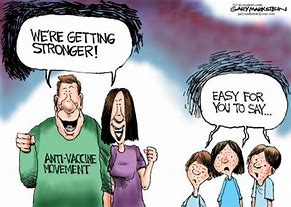
What makes the anti-immunization forces believe they have the right to re-introduce pestilence into this country? A country that suffered for decades, possibly centuries, and spent billions of dollars to eradicate these medical nightmares. What self-serving arrogance! If they are opposed to the advanced use of medical science to reduce suffering let them move to another country where these diseases and endless suffering are still readily available to them.
Do people really want to bring back the good old days of deadly diseases? Do these people think they know more about medicine and public health than the overwhelming majority of doctors, scientists, immunologists, and every major health organization across the entire planet? They are a particularly toxic sort of narcissist who places their own beliefs over the welfare of their own children and that of the general population. Obviously these people lack the critical thinking skills necessary to separate real science from pseudoscience.
Bad Packaging Design
For all of our fellow capitalists who completely comprehend the notion of cost savings being vital to corporate longevity; the American public, your customers, are asking you to combine cost savings with consumer-friendly packaging. So many have complained of having wounds, sometimes severe, inflicted by sharp edges of packaging created while attempting to find some means to crack it open. When we say consumer friendly we include environmentally neutral, as well as, easy and safe to open.
Distracted Driving
For those of you who believe you are safely driving while speaking on the phone with one hand completely occupied holding the phone to your ear, shame, shame on you! There are many things vitally wrong with that picture but the primary transgression being you are utterly distracted. Almost as egregious is you’ve given up one hand to manage your vehicle’s behavior when your distractedness inevitably causes you to create a dangerous situation for you and those around you. Get Bluetooth and stop being an idiot. Or, wait for it, pull over, complete your call and then drive on. This mobile phone behavior will eventually become illegal everywhere so you might as well wise up now and join the twenty first century.
The Mueller Report
Some are angry that Mueller’s Report did not recommend charging President Trump with obstruction of justice; or even better, treason. How could we have 200 plus investigators and spend over $20 million and not find something to impeach him?
For others, its anger for different reasons. Why have we wasted $20 million dollars and spent over two years to find nothing on Trump but, more egregious, where is the investigation into the sinister basis for the fruitless witch hunt?
So….everyone is angry about this one.
Hand Dryers
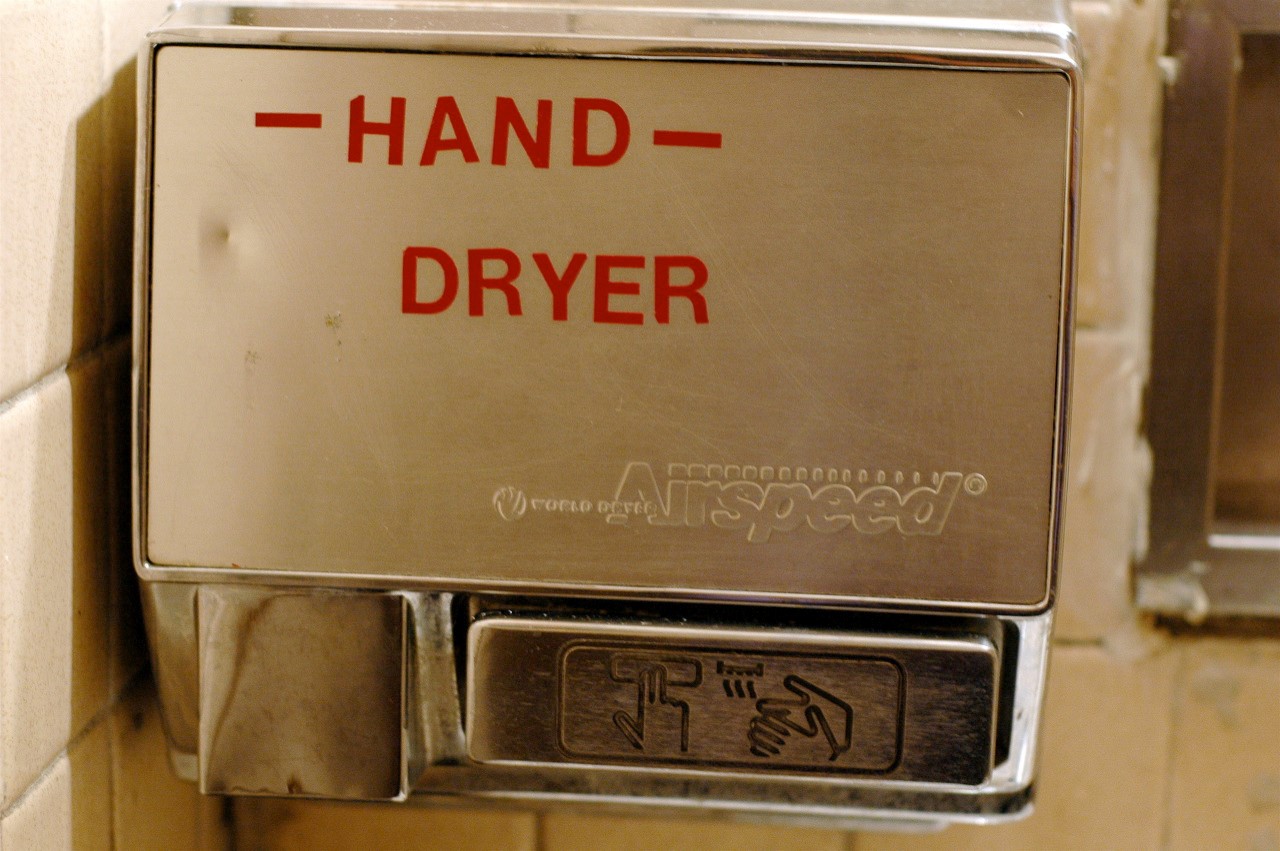
Have you ever wondered why healthcare facilities do not install electric fan hand dryers? It is because studies have found they contribute to hospital-acquired infection. In fact, the scrubbing action of towel use is critically important to the removal of pathogens from your hands.
In 2014, a team of researchers from the University of Leeds
dropped a disturbing truth bomb on the public by announcing that the no-touch
jet-air dryers in public restrooms are anything but sanitary. They found that
these increasingly popular devices blast bacteria from people’s poorly washed
hands (most people don’t wash their hands correctly) into the air and onto
nearby surfaces in disturbing quantities, increasing the likelihood that you’ll
walk out of the bathroom covered in other people’s germs.
In lab-based experiments recreating a public washroom,
jet-air dryers introduced 27 times more bacteria into the air than
good-old-fashioned paper towels, and these microbes circulated for 15 minutes
afterward.
Now, the authors are back with even more evidence against
hand dryers, this time from real-world experiments.
As reported in the Journal of Hospital Infection, Professor
Mark Wilcox and his colleagues set out to examine how hand drying methods
affect bacterial spread in hospital bathrooms – an important issue because many
serious and antibiotic-resistant infections are known to circulate in clinical
settings.
The investigation was conducted in hospitals in three cities
– Leeds, Paris, and Udine, Italy – over a 12-week period. For each location,
two restrooms used by patients, staff, and visitors were selected, and each was
set up to offer only a jet dryer or paper towels. Samples of the air and swabs
of restroom surfaces were taken every day for four weeks, then, after a
two-week pause in collections, each restroom switched to offer the alternate
drying method. This process was then repeated a third time.
Cultures from these samples revealed that the total amount
of bacteria in the air and on surfaces was consistently much higher in all
restrooms when jet dryers were being used. The most dramatic differences were
seen between the surface of the jet dryer itself and the surface of the paper
towel dispenser: In Udine, the dryer was covered in 100 times more bacteria, in
Paris it was 33-fold higher, and in Leeds it was 22-fold.
In the UK restrooms, the notorious methicillin-resistant
Staphylococcus aureus (MRSA) bacterium was found three times more frequently
during jet dryer usage periods than paper towel periods. Bacterial species
resistant to both penicillin and cephalosporins (known as ESBL-producing
organisms) and species of pathogenic enterococci – a difficult-to-treat group –
were found in significantly higher frequency and counts during these periods as
well.
In the Parisian and Italian hospitals, few pathogenic or
drug-resistant bacteria were encountered during either hand drying set-up.
“Consequently, we believe that electric hand dryers are not suited to clinical settings, and, as such, existing (e.g. NHS) infection control building guidance needs to be amended and strengthened,” Wilcox’s team wrote, adding that there is little justification for their use in any public setting given the risks they present.1
Environmental effects may tip a tiny bit to the dryer. There appears to be a case that energy necessary to completely dry your hands is many times that needed to produce a paper towel. Think about the environmental impact to burn the coal or the natural gas necessary to run the dryer for a couple minutes versus the energy needed to produce a single paper towel in a highly efficient factory producing millions a day.
For anyone whose had a hospital stay lately, the war on hospital-acquired infections is evident everywhere. These infections are killers. If hospitals fear hand dryers that much, why would you want to use one anywhere?
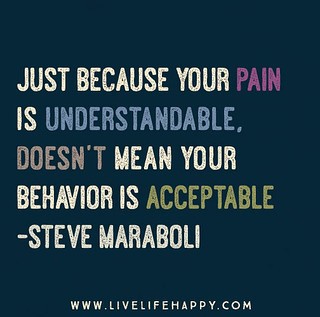
There are so many excuses available for people to be mean. The excuses include a myriad of types of trauma; depression or mental illness; merely living in the greater D.C. Area (nowhere else in the world are there that many outright mean and nasty individuals) or other environmental causes.
So why must they spew their hatefulness upon everyone including those of us whose primary style is kindness and generosity? Apparently their sad existence causes them to wish to extinguish any joy and happiness around them.
Their meanness is a highly contagious and dangerous societal pathogen. Fortunately some people, not exposed to the pathogen with any frequency, are able to shrug it off and return to their better nature. But if one is exposed to it often enough, their defenses are sufficiently weakened as to succumb to the gravitational pull of the black hole of mean.
Left Lane Cruisers
Does it appear to you as though there are more left lane cruisers now than ever? Is it the aging population or is it just self-serving arrogance? Some observe that this menace to safe navigation of our highways come in many varieties; the young and old, male and female, the dingleberries and the dimwits.
Regardless, they are creating danger for everyone around them, especially those cruisers who travel at a speed less than the prevailing general speed of the surrounding traffic. These slower cruisers, combined with the witless wonders who will do anything, no matter how crowded the roadways are, to go around them while frightening everyone with their recklessness, make highway driving miserable. This self-serving behavior makes highway travel far more dangerous than it should be.
In Virginia left lane cruising is illegal as it is in several other states. Yet you see it endlessly on our highways. Why? Primarily because there are insufficient police patrols to cite them and deter the behavior. Secondarily they are either witless in their knowledge of the law (not an acceptable excuse), or they are arrogantly disregarding the law thus creating a severe hazard for others.
Why don’t they just move to the right lane for their cruising? Well, in the right lane they may be “inconvenienced”
by entering and departing traffic. Or, by
other drivers driving slower than they are.
By cruising in the far-left lane they experience none of these “problems”.
So, just something else to both aggravate you and frighten
you with no solution in sight.
Impatient People
Impatience is one of seven basic character flaws or “dark” personality traits. We all have the potential for impatient tendencies, but in people with a strong fear of missing out, impatience can become a dominant pattern.
To be impatient is to feel and show hostility towards (or at
least about) things which obstruct, frustrate or delay [achieving] one’s goals.
Impatient people resent being held up, whether intentionally by another person
or just accidentally in the normal course of events.
Impatience has some similarity to the emotion of anger.
Animals and people alike become enraged in response to deliberate outside threats
to their well-being, or the well-being of their loved ones. The anger is partly
an expression of the fear that comes from being threatened, invaded or
mistreated, and partly a sort of warning shot, a firm “No!” to deter the
outside threat from going any further.
Impatience is also somewhat different from anger, however,
in that the impatient person is predisposed to perceive virtually all
situations as threatening—not to their survival per se but to [achieving] their
goals. More exactly, it is as if their survival depends upon the accomplishment
of as many goals as possible as quickly as possible.1
When observing impatience, it can sometimes appear almost viral in its occurrence and frequency. Obstacles (mainly us, the non-impatient people), regardless of the circumstance i.e. difficult traffic situations, or, long lines of people waiting for some service to be performed, become the objects of their outrage. The lengthier the delay or the more frustrating the “obstacle” becomes, the angrier, more frustrated and aggressive the impatient ones become. Sometimes they attack each other but mostly their rage is focused on the innocent obstacles.
So, it takes a great deal of patience and maturity to attempt
to ignore the impatient ones and their foolishness. Short of a life-threatening situation, how
important can the goal be relative to treating everyone around you (the “obstacles”)
as sub-human.
So, how many American citizens expect our leaders to be
perfect? There are many with palpable
zeal. A visceral desire for their chosen
one to be pure and flawless in every way.
The proverbial blind eye squeezes out the few perceived flaws as
unimportant to the mission.
Rule#1: My chosen
leader is perfect.
Rule#2: If imperfections are found, refer to rule#1.
Thus, any material flaws are cast aside as lies and innuendo.
The fact is they are ALL flawed. Their humanity virtually guarantees it. Equally obvious, some have had greater flaws
then others. Crystal clear flaws like the willingness to engage in illegal
conduct. President Nixon comes to mind
but there have been others.
Then there are the gray matters. Conduct unbecoming an elected official that doesn’t quite cross the line, or, when it does cross the line, the cover up is successful. Nothing fires-up social media and the mainstream media more. All of this wide-open protestation of love, of hate and of angst plastered everywhere you look, its all a fairly recent phenomenon. This is basically all since the John F. Kennedy administration. For JFK, and those earlier presidencies as well as those in positions of power almost anywhere, the press had taken the high road especially when the offense was more personal in nature, like infidelity.
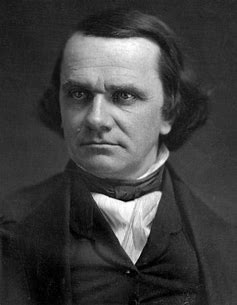
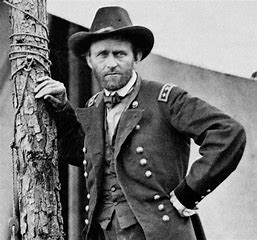
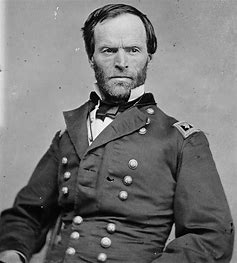
Going back a hundred plus years before Nixon to the times of Abraham Lincoln, Ulysses S. Grant, William Tecumseh Sherman and Stephen Douglas, they all had their flaws or weaknesses. Lincoln was probably the closest to freedom from major flaws. His wit, intellect, deft political skill and grasp on the meaning of humanity crafted him into a leader any nation would rise up to exult. Certainly among the greatest if not the greatest political leader in modern history. Sherman, one the fiercest and most brutal warrior leaders of his time, was actually a bit of a pacifist. Yet he spent his entire career in the military. Grant, the brilliant military architect of Civil War victory for the Unionists, should have taken the Sherman route on politics exemplified by Sherman’s famous quote “if nominated I will not run and if elected I will not serve”. Grant’s time as president was not a happy one for him nor the nation. Douglas chose to become a politician in the northern free state of Illinois, even though he owned a plantation with many slaves in Mississippi. Regardless, he chose to run for the Illinois United States Senate seat against Lincoln in 1858 and won. Well, Illinois Senators are chosen by the General Assembly and Mr. Douglas’ party won the majority in the General Assembly in 1858. In 1860 Lincoln won the presidential election against a four-man field that included Stephen Douglas. 1n 1864 Lincoln defeated former General George B. McClellan, by a wide margin of 221-21 electoral votes. Although there was worry at the White House that Lincoln’s actions, of continuing to fully prosecute the war and refusing to accept compromise, would lead to his defeat, he won a landslide victory. Many historians would agree that William Tecumseh Sherman’s victory in the siege of Atlanta in the Fall of 1864 sealed successful re-election for Lincoln.
With the possible exception of Douglas, none of these
leaders seemed to have much difficulty delineating between right and
wrong. They chose a righteous path; even
if some of those around them did not.
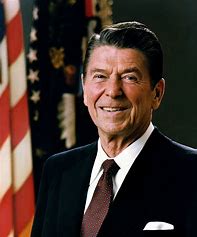
Not so different from our current lot of politicians. During those intervening one hundred years
only two presidents deserve greatness ascribed to them, FDR and Ronald
Reagan. Both war time presidents not
surprisingly (FDR for our greatest war time victory in WWII and Reagan for the
Cold War victory he won without a shot fired).
So, is our expectation that our leaders will strive with every
cell in their being to be perfect expecting too much? Are these expectations unrealistic for our
church leaders, the school principal or the chief of police? Sadly, we are more likely to experience painful
disappointment when church, school or police officials fail our expectations
then when we learn of presidential failings (or those of presidential
candidates). Are there degrees of failure
or disappointment? Is the line they must
cross, to go from support to abandonment, the same for all? By design these are all decisions we alone must
make in declaring our support for specific leaders. Our founding fathers knew quite well these
decisions would be difficult and burdened with abundant complexity. The absolute brilliance of the design is that
each American citizen has the opportunity, the right, to make that choice
regardless of perceived flaws.
There is of course then, “my flawed leaders is less flawed
then yours”. Or, your leader’s flaws are
ghastlier and more repugnant then those you accuse my leader of possessing. The old “throw out all the bums…except my
bum”.
So, what if we suddenly became as tolerant of the failings of our leaders as we are of our brother or brother-in-law? Or even our spouse or our children? What if we focused our entire attention to strictly policy differences? Would that even work? There are many who believe we should try. The question then becomes can we collectively look beyond characteristics like religious affiliation, marital fidelity, or even ethic origin? Others believe that society is so fragmented that this sort of altruism is virtually impossible save but by a few. The altruistic among us represent so few in number as to be statistically meaningless.
How sad are we? That
we first look for the worst in others.
How sad are we that our friends, family and colleagues, who, in every
day circumstances lead with kindness, become ferocious beasts when anything
negative is said about a politician they support. Their ears close and their fangs lengthen hungry
for blood.
Unfortunately, this disease-like state has spread to those with
whom we held final hope for a bit of altruism and compromise. That four years
is not too long to do nothing waiting for that next opportunity when all the
political stars align once again and the need for compromise has passed. That the political hopes and desires of half
the populous can be crushed with domination.
How sad are we.
Finally, finally, a sliver of a ray of light from above for
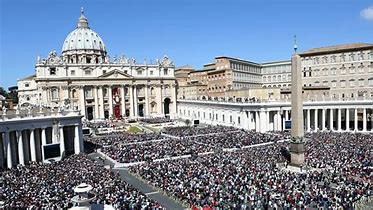
the Catholic Church. The Church is considering,
considering, allowing married men to receive “priestly ordination” in the
remotest regions of the Amazon river.
Some would call this astonishingly progressive. Some would call it a crack in the proverbial
wall of “the gift of celibacy”. So which
is it? Is it the Church taking priestly ordination
of married men “for a test drive”? Or is
it the course of last resort for the Church having exhausted all other possible
sources of priests who could function at a minimally acceptable level in this
one of the remotest regions in the world?
It appears quite likely that it could be both.
Aside from the challenges the Church faced in the early
centuries of its existence, the current crisis centers around unthinkable acts
by priests. This, combined with a severe
shortage of priests, is shaking this religious juggernaut from its parishioner core
to its leadership in the Vatican. The crisis
reverberations, mostly surrounding the priest as a sexual predator, are causing
geological fault lines between the Church and many of the Catholic faithful. Evidence suggests that even some of the most
fervent supporters, given the apparently lack of effective and widespread
action by Church leadership, are allowing these seismic schisms to fully
separate them from any church related activity.
With their faith completely shaken, they are also closing their pocketbooks
effectively creating a third crisis. The army of God is having its supply lines
so effectively reduced as to create new struggles for the Church in its fight against
evil.
Not to suggest that Catholics, or even Christianity, represent the entirety of the legions of God. It is striking to anyone who takes a moment to ponder it, that virtually all “religions” worship a supreme being. It’s truly remarkable that these God-centered religious factions have occurred spontaneously around the world in some cases independent of one another.
Some have stated that these religions are artifacts of a
time when science could not explain certain phenomena. These phenomena were then attributed to the
work of a God. A notion the people could
comprehend. A notion that gave rise to
God worship in the hope that these actions would bring God’s favor to
them. The fearing and worshiping of a God
removed the fear of a chaotic world where actions beyond one’s control were perceived
as completely arbitrary.
For many Catholics, who choose to think more logically about why the Church is good for the people and what the Church must do to remain relevant in a modern world, tough choices must be made quickly. Especially in a world where everything finds its way to the web instantly.
Married men are not free of sin, nor are celibate priests, so the time has come to set aside “the gift of celibacy”. The Church should ordain married men, shed the Church of the predators, and you solve two enormous obstacles to the long-term success. Then, and only then, can the process of healing the deep, hideous wounds begin in earnest.
Obviously much easier said than done. Yet time is of the essence. The Catholic Church is on course to lose
almost an entire generation, possibly two or more, of parishioners. Often change within the Church doctrine or
dogma has taken decades. The Church must
move much more quickly. Otherwise the number
of engaged parishioners will shrink, the treasury will shrink, and the Church’s
relevance will diminish.
This would not be a good thing for the world. If you believe evil exists, and we see evidence of it every day in a world of global instant communication, then religions that promote Judeo-Christian like principals of peace, love, charity, family must be preserved to combat theses forces. The Catholic Church has done so much good in this world over two millennia. Its charitable acts around the world, with ministries like free or low cost healthcare, are remarkable. The Catholic Church has erred egregiously for centuries perpetuating this notion of “the gift of celibacy”. It may yet be the source of its downfall.
Many who know more about the generation that gave birth to
the “Baby Boomers” will call them “The Greatest Generation”. The generation that survived the Great Depression,
that won World War II and enabled this country to emerge on the global stage as
the greatest nation on earth. These are,
in fact, undeniable accomplishments of that “Greatest Generation”.
No amount of words can fairly represent the many unspeakable
sacrifices willingly endured by this generation of Americans during World War
II. The debt owed to them by all Americans, and the world, for our freedom from
oppression is incalculable. And because
it deserves to be said one more time, the accomplishments of this generation of
heroes evokes only one description, The Greatest!
We, in the Baby Boomers, are so incredibly proud of our
fathers and mothers and uncles and their friends and relatives, many who are
the descendants of immigrants who came here to be a part of this miracle of
American democracy and capitalism. They
built and manufactured and governed with the single-minded goal of being a part
of the American dream. And they were
incredibly successful.
The enormity of the pressure that success put on the Boomers
was expressed in more than the usual ways.
The sixties and its counterculture revolution were a huge expression of
pressure avoidance. Although many, many Boomers chose the traditional path, and
quite successfully took the proverbial baton, the war in Viet Nam and how it
was portrayed in the media, led many to an alternate path.
For many of us this war, the war in Viet Nam, was a very
different and multi-faceted experience compared to WWII. No one should diminish the sacrifices made in
the name of freedom during the war in Viet Nam.
And although many, God bless them, chose to volunteer for military duty,
many more, because of how the war was portrayed, took our chances with the
selective service draft. And there were
a significant number, because of the attitudes about the war, that attempted to
evade the draft and military service by moving to Canada or elsewhere. Those of us that “lucked out” with the draft
system, we were able to carry on with our own chosen path be it college, a
trade, full time work of some kind, or, to just “drop out” and drift with the
winds of the counterculture movement.
When we look back at the sixties and seventies, we Boomers are
old enough to have enjoyed those times and look back with a big smile. Those were absolutely the coolest times ever. Saying societal norms experienced a significant
loosening would be an understatement.
The music of the sixties was by far the greatest musical
decade. The list of world-class, genre-creating artists is enormous! Here are just some of them.
Aretha Franklin
The Beatles
The Dave Clark Five
The Buckinghams
The Chi-lites
The Rolling Stones
Dusty Springfield
The Four Seasons
The Four Tops
Gary Puckett & the Union Gap
The Guess Who
The Ojays
Jay & the Americans
Little Anthony & the Imperials
Martha Reeves & the Vandellas
Marvin Gaye
Tommy James & the Shondells
The Zombies
The Young Rascals
The Beach Boys
The Ronettes
Barbara Lewis
The Supremes
The Righteous Brothers
The Del-Vikings
The Grass Roots
Smokey Robinson & the Miracles
The Vogues
Jimi Hendricks
Dionne Warwick
The Temptations
Fats Domino
Strawberry Alarm Clock
The Doors
Creedance Clearwater Revival
The Hollies
The Drifters
Joan Baez
Blood Seat & Tears
The Isley Brothers
The Mamas & the Papas
Ike & Tina Turner
Buffalo Springfield
The Animals
Stevie Wonder
Neil Diamond
The Yardbirds
Grateful Dead
Jefferson Airplane
Pink Floyd
The Moody Blues
Van Morrison
The Band
Crosby, Stills & Nash
B.B. King
Janis Joplin
The Miracles
Roy Orbison
Simon & Garfunkel
The Kinks
The Byrds
Cream
Led Zeppelin
Sam Cooke
Elvis Presley
James Brown
The Who
Ray Charles
Bob Dylan
Sly & the Family Stone
The Velvet Underground
Jefferson Airplane
Chuck Berry
Wilson Pickett
The Monkees
Herman’s Hermits
The Lovin’ Spoonful
Jackie Wilson
Traffic
Dion
Donovan
Joni Mitchell
David Bowie
Otis Redding
Johnny Rivers
Petula Clark
Peter & Gordon
Jan & Dean
Gladys Knight & the Pips
The Drifters
There are many more wonderful artists of the sixties, and,
frankly, the early seventies, not mentioned here. This list is an assemblage of the greatest
icons in modern musical history. Although
this was not intended to be an all-inclusive list, it is a demonstration of the
marvelous strength of the creativity and virtuosity of so many artists in a
single decade. Unquestionably
unsurpassed!
The impact these artists had on a generation, a culture, a
nation was the most profound in the history of any nation. Never have musical artists had such an impact
on the style, language, the fashion, and lifestyle of an entire generation as
the artists of the sixties have had on the Boomers. From the early 60s rock and R&B through
to the culmination of its affect in the 1969 event heard around the world,
Woodstock.
And not just in the United States. So Many artists from the United Kingdom, that
honed their craft across Europe, often used the music created by American Blues
artists as a creative platform for their inspiration. With great triumph in Europe, they brought
their brand of Rock’n Roll to the U.S. to smashing success with this new generation
ready for this new messaging and new freedoms of expression. As much of this new music emanated from
nightclubs across Europe, much of the influence on style and fashion in the
sixties and early seventies also emanated from Europe in places like London’s Carnaby
Street.
Here in the U.S., one geographic location represented the cultural
and generational attitudes more than any other; the Haight-Ashbury district in
the City of San Francisco. This bohemian community, populated early in
the sixties by the so-called Beat Movement, became the cultural high ground of the
counterculture movement dubbed “Hippies” for their clear turn away from
tradition in attitude, lifestyle, fashion and even language.
The War in Viet Nam was a potent ingredient in this sixty’s cultural
cauldron as the anti-war activists were a glove fit to the themes adopted by
the counterculture movement. Peace, free
love, the brotherhood of man populated the banners and placards carried by
anti-war protestors. The country was in
crisis.
Despite this turmoil and political strife, the peace and free
love generation had a hell of a lot of fun in the sixties and seventies before,
for the most part, settling down and pursuing a more traditional American
lifestyle. For the coolest generation, the sixties and
the seventies represented extended “recess” in a giant American playground. Some had jobs, some began careers, some just chose
to turn on, tune out, and stayed out for decades. A luxury afforded to them by the changes in
American society and success of the American economy.
But for most of the Boomers, a more traditional way of life eventually
called. Those of us who decided they
wanted a family of our own, to own a home, raise children well and send them to
college, knew this required a regular, substantial income. Time to put away childish things and don the
harness. There were many Boomers who
never strayed from the traditional path, but, for us late bloomer Boomers, the
opportunity was there to have that life.
Hard work; LOTS of hard work lay ahead, and it was all worth it.
The Richmond Virginia community has so much to
celebrate. The Richmond Times Dispatch
(RTD) exclaimed, in a January 16, 2019 editorial titled “We’re No. 100”, the
many virtues of our city. “In 2017
Richmond was ranked as one of the nation’s top five hipster paradises. Ultra-artsy VCU, the Fan district, plentiful
(widely celebrated) restaurants, and great breweries all helped to make
Richmond one of America’s hippest cities, according to rankings by MovieHub. The plentiful thrifts shops, tattoo parlors and
vegan options throughout the area also helped win us that ranking on the ‘US
Hipster Index’. “
“In 2018, Forbes magazine named RVA one of the country’s top
10 coolest cities. Once again, some of
the reasons for that ranking included the vibrant craft beer scene and the multitude
of great places to eat.”
“Also in 2018, a travel-guide book publisher, rated River
City as one of the top 10 ‘underrated, rejuvenated and out-of-this-world’
places to visit. The company said it traveled
around the globe to find the world’s best cities. Again, Richmond made this list in part because
of its ‘microbreweries, cideries, and buzzworthy restaurant’.”
In another exclamation of the City’s virtues, RTD’s May 14,
2019 story about a start-up credit card company (Petal) choosing RVA (in this
case selecting a location in Chesterfield county) over Austin Texas and Salt Lake
City Utah. Petal, choosing RVA to locate
its first offices outside NYC and committing to hire 80 people over the next
three years, said this. “We chose Richmond after looking at a number of other
locations around the country.” “We
looked at the depth and richness of the labor pool, affordability of living and
the proximity of colleges.” Also stating
“Richmond was an easy choice….and it is a very livable city”.
These accolades only scratch the surface of what makes our
community great with wonderful architecture, history, museums and natural resources
galore. This list of the area’s riches can go on and on. So what is holding this obviously very
attractive community back from greatness?
City government is at the core of the remaining detractors facing
this community. The city’s inability to
effectively and efficiently govern are the hands pulling back the reins on a
galloping city appearing destined for greatness.
The city’s schools are a continuing embarrassment with a majority of schools failing to be accredited and a majority of third graders unable to read at grade level. Crumbling roads and bridges cast a pall on the city’s appearance and resident safety. City leaders appear unable to restrain cost while consistently seeking additional sources of revenue. Yet, reaching many important goals remain elusive year after year.
Its elected governing body, the City Council, is under constant pressure to address rising cost while attempting to protect its citizens from the burden of new requests for additional tax revenue. All while the city’s schools and infrastructure crumble beneath them.
To achieve the greatness this city has strived for, city
leadership must find the strength and wisdom necessary to dig deeply into the
core issues of effectiveness and efficiency.
They must face the final obstacles to greatness and transform agencies
of city government into the paragons of cost management and service delivery so
often found in surrounding local government, as well as the private sector, right
here in our community.
In fact, if our Commonwealth’s own Joint Legislative Audit
and Review Committee’s (JLARC) charter could be altered to include exercising
its powers on behalf of City Council, for say a single biennium, then possibly
much good could be accomplished. JLARC
is credited with assisting the Commonwealth in its recognition for being among
the most well-run states in the union.
Having personally observed JLARC in action, the city would be well
served to have this level of independent review by such a prestigious body.
For many years Richmond has been regarded as a poorly
managed city. All of Richmond’s
citizens, and those of the affected surrounding communities, deserve better.
Who wouldn’t want a cushy life? This is not a description of the life of the rich
and famous, cushy as it may appear. That life is one you are born into, or,
having the ability (as well as the grit and good fortune) to turn a bit of brilliance
into the American dream. No, this is not
about that.
This is more about that other American dream. The one where you work hard. Not just at your job but the harder work of
making a better life. It starts early in
life with good parental guidance. Working
hard at school to have a shot. Working hard
on becoming a better person. Working hard,
really hard, on life skills to give yourself the tiniest of openings.
And let’s say you, with great tenacity and decent intellect,
manage to squeeze through that crack. Well
that’s not the end, its just the beginning!
Even with a decent start, and an amazing spouse/life partner by your
side, the slaps in the face and the gut punches just keep coming. The tests of your character, intestinal fortitude,
integrity, physical stamina and intelligence are one tsunami after another the
rest of the way……..until your eyes close for the last time.
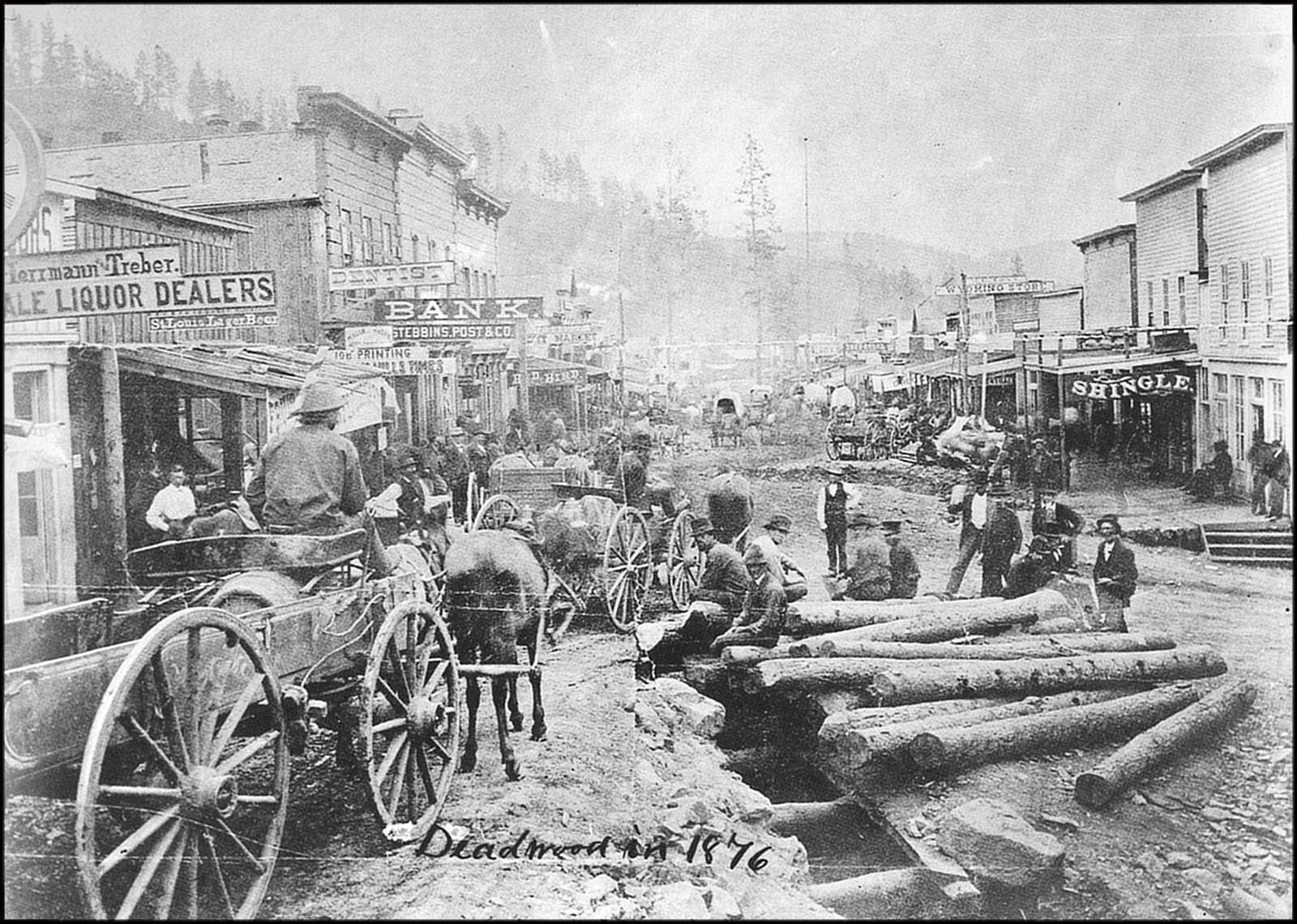
In this following excerpt of the script from the television
series “Deadwood” Season 2 episode 19, one of these tsunami-like challenges has
come the way of the owner of the camp’s newspaper The Pioneer. In raw, Americana
Shakespearean prose the last paragraph crystalizes this notion most succinctly.
(Early morning at the
camp, we see Al open a door…)
Al: Did you know this fucking walkway
connected us?
Merrick: (Sitting below, at his desk at the Pioneer) Several
of your patrons, in different stages of undress, have illuminated me.
Al: (Closes door) What happened there? (Walks downstairs)
Merrick: Not only was my press disabled, but my office was ransacked
and feces mounded in the corner. A
message of objection to my handling of Yankton’s notice on the claims.
Al: Posting
rather than publishing, huh?
Merrick: The camp’s new school teacher, a lovely woman, was so
traumatized by what happened that she left!
Al: Cy
Tolliver.
Merrick: Who didn’t even trouble, when confronted, to deny it.
Al: (Sits, lets out a sigh) Why ain’t you up
and running again?
Merrick: I’m in despair. The
physical damage is repairable, but the psychic wound may be permanent.
Al: (Leans forward, concern on his face.) You
ever been beaten, Merrick?
Merrick: (Rolls his eyes) Once,
when I thought I had the smallpox, Doc Cochran slapped me in the face. (Al slaps him quickly) Ah! (He stares at Al, touching his cheek – he
leans forward) Stop it, Al.
Al: Are
you dead?
Merrick: Well, (touches cheek) I’m
in pain, but no, I’m obviously not dead.
Al: And
obviously you didn’t fucking die when the Doc slapped you.
Merrick: No.
Al: So
including last night, that’s three fucking damage incidents that didn’t kill
you. Pain or damage don’t end the world,
or despair or fuckin’ beatin’s. The
world ends when you’re dead. Until then,
you got more punishment in store. Stand
it like a man—and give some back.1
Besides the brilliance of the writing, acting and production
design of Deadwood, it brings a wide-eyed, lucid parable to the screen about
truth. Deadwood is both a wistful window
and a harsh portrait that Shakespeare would find admirable. Its most prophetic message
is about the truth. The truth that “free”
is more than a myth, it’s a dangerous lie of evil origin. Only hard work, risk-taking (amid many imminent
potentially “deadly” dangers), some good fortune, an ability to ride the many
ups-and-downs, and an impenetrable resolve to succeed brings the mere
possibility of survival and a good life.
Anyone……anyone…..politician, parent, professor, priest, rabbi, Imam, et al, who promises anything but a life mostly filled with struggle, especially in America (despite the delusional impression widely held outside this country, “easy street” it aint), is betraying whatever trust may exist with the person at hand. Preparation for that struggle, physically, psychologically, educationally only affords you a shot at squeezing through that crack. Then its all uphill from there……
“There’s no question
about it: the corporate conservatives and their allies in the political and
religious right are achieving a vast transformation of American life that only
they understand because they are its advocates, its architects and its beneficiaries,
in creating the greatest economic inequality in the advanced world, they have
saddled our nation, our states and our cities and counties with structural deficits
that will last until our children’s children are ready for retirement and they
are systematically stripping government of all its functions except rewarding
the rich and waging war.”
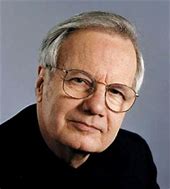
Bill Moyers
I am certain Mr. Moyers is a fine human being, but these gross
exaggerations are not only inaccurate but serve to inflame and diminish the
possibility of honest dialogue between the parties who must work together to
solve the systemic problems of this nation.
Please, regardless of your political affiliation, hear me out to the end
of this short piece.
Some simple facts.
Cities, counties and states are statutorily
prohibited from operating budgets containing deficits. Every budget, every year must be balanced.
Nearly 70%3 of the annual federal
spending goes to the administration and delivery of wealth transfer programs like
Social Security, Medicare, Medicaid, and so-called welfare programs including
cash assistance, healthcare and medical provisions, food assistance, housing
subsidies, energy and utilities subsidies, education and childcare assistance,
and subsidies and assistance for other basic services administered either at
the federal or state and local level.
That means 70% of deficit spending goes toward
these expenditures. Actually, these
expenditures represent much more of the deficit if you remove defense spending,
the Supreme Court and law enforcement, as well as the cost of the legislative &
executive branch, all constitutionally mandated functions of the federal government.
More federal debt, approximately 9 trillion, was
accumulated during the Obama administration than the deficits accumulated by any
previous administrations by trillions.1
The current total federal debt is approximately 20
trillion which exceeds the entire U.S. annual GDP (hopefully that scares the pants
off you). The current federal spending
is approximately 4.5 trillion on revenues of 3.4 trillion.2
In round figures the top 1% most wealthy have an
average net worth of approximately 10 million dollars. If the
top 1% of the population is approximately 3.3 million people then their total
approximate wealth is 33 trillion.
If you taxed the top 1% with a 10% wealth tax (well,
first of all, you would unequivocally collapse the economy in an apocalyptic
fashion, but for argument sake let’s say a socialistic president and legislature
took power and enacted such a wealth tax) that’s 3.3 trillion per year in additional
tax revenue. If not a single additional dollar
in federal spending were enacted, not “free” healthcare, “free” college”, the
green new deal, none of it, it would be nearly a decade for the total federal debt
to be paid back with federal spending frozen at the current level.
So lets face facts, none of that is going to happen. Collapsing the economy in that way serves no one. Given this reality, what can be done to address social justice issues like income disparity, the cost of education, the cost of healthcare and other topics like climate change? Two primary realities must be addressed. How do we raise taxes enough on the ultra-wealthy to reduce deficit spending to a manageable level and squeeze out enough after that to begin to reasonably fund programs to address the social injustice issues without driving the economy into recession? Of course, the trend line in deficit spending and the cost of social programs like Social Security and Medicare must be bent by affecting benefits for future generations. Because even a reasonable tax on the ultra-wealthy will not prevent insolvency for those programs.
That’s it. Anything more radical than that, like re-raising taxes on businesses, would only serve to reduce GDP that will reduce tax revenues and reduce the federal government’s ability to spend more to make things better for those seen as being treated unjustly. It has to be a reasonable plan that will probably take five to ten years to have a significant, measurable impact and not drive us into a low growth, high tax, perpetual state of misery, Euro-style economy where nothing material is accomplished. Just ask the French how it’s going.
And there are those, economist and politician alike, whose incredulity would rupture the Richter scale, that this nation is basically at full employment with GDP in excess of 3% and still producing annual trillion-dollar deficits in federal spending. Some aghast that federal tax revenues approximating 3.5 trillion is not enough to serve the needs of this nation. Others will zero in on this as further evidence that supply-side economics are fantasy. Regardless where you sit on that full spectrum, we are spending a TRILLION DOLLARS MORE EACH YEAR than we collect. If we call it a 30% spending deficit then across the board 30% tax increases will only stop the current bleeding of red ink and offer nothing new in help. The enormity of the problem cannot be overstated.
So Mr. Moyers, can we please set aside the inuendo, the vague fact-free attacks and help us ease into a dialogue that can really start to help people who need it with a reasonable plan that has a real chance to succeed in the long term? If we are going to have any sliver of hope for success, we must demand all the attack dogs (left and right) be silenced, or, minimally ignored, and allow reasonable men and women from both sides to begin material discussions about what is fiscally feasible in addressing the social justice issues before us. Nothing meaningful can be accomplished in one year or maybe even one term but certainly in the next decade we can do what Americans have always done……find a way.
It appears the most progressive members of society are in a frenzied
rush to homogenize all the world’s people.
They want to eliminate any sort of ethnic identity. Their assertion is that ethnicity is at the root
of all the troubles with the world. The
assumption is this will create a world where someone’s appearance or religion
or ethnic origin is indiscernible from the next person. A world where ethnicity, race and even
physical appearance will be blended into a human race devoid of differences. Skin color, eye color, physical stature,
facial features will all disappear as differences into a homogenized, androgynous,
atheist global persona.
This may indeed be a cure for all that ills the human species on this planet, or it may not. They speculate the need for constructs like religion or sovereign states would fade away. Without those constructs war among “tribes” would be devoid of purpose as tribes would only be an artifact of ancient history. That “tribalism” is the root of evil as it may be described.
This notion of tribalism as a source of evil is one
conceived of, or fashioned by, Former President Barrack Obama in his public
addresses on tribalism. Here’s an
example from the Chicago Tribune.
—————————
Obama warns against ‘a crude sort of nationalism’ or
‘tribalism’ taking root in the U.S.
President Barack Obama warned Tuesday that Americans and
people around the world “are going to have to guard against a rise in a
crude sort of nationalism, or ethnic identity, or tribalism” taking root
amid the populist movements that are gaining currency around the world.
“We are going to have to guard against a rise in a
crude sort of nationalism, or ethnic identity or tribalism that is built around
an us and a them, and I will never apologize for saying that the future of
humanity and the future of the world is going to be defined by what we have in
common, as opposed to those things that separate us and ultimately lead us into
conflict,” Obama said.
“Take Europe,” he continued. “We know what
happens when Europeans start dividing themselves up and emphasizing their
differences and seeing a competition between various countries in a zero-sum
way. The 20th century was a bloodbath.”
“In the United States we know what happens when we
start dividing ourselves along the lines of race or religion or ethnicity. It
is dangerous. It is dangerous, not just for the minority groups that are
subjected to that kind of discrimination, or in some cases in the past,
violence, but because we then don’t realize our potential as a country when we
are preventing blacks or Latinos or Asians or gays or women from fully
participating in the project of building American life,” he said.
“So my vision is right on that issue, and it may not
always win the day in the short term in any particularly political
circumstance, but I am confident it will win the day in the long term,”
Obama added. “Because societies which are able to unify ourselves around
values and ideals and character, and how we treat each other, and cooperation
and innovation, ultimately are going to be more successful than societies that
don’t.”1
—————————-
Given a broader perspective, tribalism can be defined in more than one way and devoid of evil intent. Former President Obama’s notion revolves around specific aspects of tribalism (race, religion and ethnicity) that certainly have been an incendiary force or cause of conflict, war and bloodshed between “tribes”. Yet there are also some real positives in tribal affinity.
On a very personal level, members of a tribe e.g., Scandinavians, Jews, Slovaks, Native Americans, Chinese, Mexican, among many, many others, find natural attraction in couples’ relationships, and a sense of personal security, among tribe members. The notion of security is proven and profound. The attraction is deep-seated and multi-faceted. It is physiological and psychological.
In this excerpt from a piece on Psychology Today.com “Are We
Attracted to People Who Look Like Us?”2, the reality of who we are
attracted to and why, finds some scientific basis.
————————
As it turns out, then, we are much more likely to fall for
someone who looks like us or our opposite-sex parent. This may indicate that
our incest taboos are social constructs instituted to prevent people from
following their instincts. However, there are other explanations of why we are
attracted to people who look like us.
Researchers at the deCODE Genetics company in Reykjavik,
reporting in a 2008 issue of Science, found that marriages between third or
fourth cousins in Iceland tended to produce more children and grandchildren
than those between completely unrelated individuals. The researchers suggest
that marrying third and fourth cousins may be optimal for reproduction because
this degree of genetic similarity may produce the best gene pool. Sibling and
first-cousin couples, were they to mate, could have inbreeding problems,
whereas couples genetically far-removed from each other could have genetic
incompatibilities. Third- and fourth-cousin couples, though, tend to be
genetically compatible while having no serious inbreeding problems.
At first glance, such findings seem to go against the
so-called “Westermarck effect,” which posits that people who grow up
together are disposed not to fall in love with each other after they reach
sexual maturity. But the Westermarck effect—based on a series of studies done
by Finnish anthropologist Edvard Westermark—actually is consistent with the
recent findings—living in close proximity is no doubt the decisive factor for
desensitization in terms of sexual attraction, not the degree of the
individuals’ resemblance. in fact, the
Westermarck effect has been confirmed, in the Israeli kibbutz system of
communal living, in which people who grow up together are typically not
directly related to each other and do not look alike. And consider how
traditional sim pua marriages, mostly dating from pre-modern Taiwan, also
confirm Westermarck’s theory: Sim pua means “little daughter in-law.” In
the system, a female infant is given to a family to be reared as their own
daughter. When she grows up, she is to marry a son in that family. But sim pua
marriages have produced a low fertility rate, a high divorce rate, frequent
adultery, and lack of sexual attraction. In some cases, the son or
“daughter-in-law” has refused to marry their destined-for spouse. So,
the degree to which a couple resembles each other could be a defining factor in
relationship satisfaction after all.2
————————-
Not to say this is an absolute, and more frequently than ever successful trans-tribe relationships are occurring. Without a doubt, when the possibility presents itself, do what makes you happy. One of the most important and unique American constitutional rights is the pursuit of happiness. But, none of us should be made to feel as though we are Neanderthals because we have strong positive feelings about our connection to our tribal origins. We are attracted to who we are attracted to, simply as that. We are attracted to potential partners for any number of possible combination of reasons. For centuries attempts to force couple relationships, for political alliance or cultural reasons, nearly always end in disaster and unhappiness. There appears to be strong evidence that this tribal affinity thing is a significant force in who we love, who we are comfortable around, who makes us feel safe and with whom we procreated.
This homogenized, borderless, raceless, religion-free society some desire may be coming our way as humans. Those in the media and the like, that produce the images we all see every day, wish to portray us as well down that path. It just isn’t so. It will have to overcome many millennia of tribalism, deeply seated in our very being, to become the dominant human condition globally.
Seriously, have you thought about it? There, it did it again, where did that last moment just go? We were there, it was as real as anything can be, and now it’s gone. Where in the vast universe and beyond does the past, a second ago and ancient past, go? It has to go somewhere doesn’t it?
Many have tried to explain it. The notion of entropy, in the “arrow of time”,
is presented as an irreversibility. That
the universe is a system with a certain known macrostate order regardless of the
variability of what occurs in the microstate.
That the cosmological arrow of time points in the direction of the
universe’s expansion (above diagram2). It may be linked to the thermodynamic
arrow, with the universe heading towards a heat death (Big Chill) as the amount
of usable energy becomes negligible.1
That the radiative arrow of
time moves away from its source, with a causal arrow of time notion that each
event has a cause with the causal event preceding the event.
,An epistemological problem with using causality as an arrow of time is that, as David Hume maintained, the causal relation, per se, cannot be perceived; one only perceives sequences of events. Furthermore, it is surprisingly difficult to provide a clear explanation of what the terms cause and effect really mean, or to define the events to which they refer. However, it does seem evident that dropping a cup of water is a cause while the cup subsequently shattering and spilling the water is the effect. 1
Physically speaking, the perception of cause and effect in
the dropped cup example is a phenomenon of the thermodynamic arrow of time, a
consequence of the second law of thermodynamics. Controlling the future, or causing something
to happen, creates correlations between the doer and the effect, and these can
only be created as we move forwards in time, not backwards.1
All of this speaks to the
how of time passing but nothing of the location of the past beyond our own
memories. Does it pass into a new
universal dimension? Some papers theorize
that the past does remain physically with us, no different than the present. That the future is out there in the ether
waiting to “happen”. So, if the past is
somehow physically available, how do we, or is it possible to, “visit” the past
as well as the future? These are all notions
considered by what’s called the “A Theorists and the B Theorists”.
The “A Theorists” notions are akin to the Arrow of Time view
with us traveling down a metaphorical “road”.
There is the past, the portion
of the road already traveled, the present, and the future, the portion of the
road yet to be traveled. The A Theorists
propose that the past may be a “real thing” that exists beyond just in our
memory. Those subscribing to a physical
past appear to gain support from the nature of mathematical space-time. The metaphysical view has the past only
existing in memory.
The “B Theorists” in contrast, suggest the past and the
future have the same physical or metaphysical status of existence as the
present. The “Bs” theorize that the future does exist but has an element of indeterminacy,
with a kind of physical free will causality.
It is said that time travel buffs bend more toward the “B” perspective with
a more metaphysical view as time travel presents a number of very difficult
mathematical obstacles.
So, if the past does physically exist could we travel to it? Wouldn’t we have to travel faster than time? If we could travel to the past, in what state
would we be in? If the past were
physical is it still like a photograph or fluid like video or film? Could we interact with it or is it as fixed
as our memory of it?
Future generations may conceive of and create answers to
these many questions, problems and conundrums.
When we stop to think about what just occurred, there, that moment that
just past, whether cosmically consequential or not, it would be fascinating to
know if that moment still exist somewhere not just in our memory.





























 The Willow
