For those among us who choose to ignore conspiracy theories, there is one that cannot defy known fact. The People’s Republic of China purposefully released COVID-19 upon the world to ensure President Trump would not be reelected in 2020.
During the 2016 campaign the Trump team (and during the Trump administration) declared China (The Peoples Republic of China) intends to “steal” millions of “blue collar” jobs from the American economy – CHECK.
COVID-19 came from China – Check.
COVID-19 “mysteriously escaped” from a supposedly secure lab IN CHINA – CHECK.
COVID-19 is released at the beginning of the 2020 presidential election year – how coincidental – CHECK.
US and world economies virtually shut down forcing millions of Americans, and many millions more worldwide, out of work – CHECK.
The PRC declares health emergency and miraculously produces “temporary” hospitals instantly while secretly planning for five to ten million Chinese nationals to die as the “price” necessary to prevent Trump from being reelected – CHECK.
Democratic Administrations have typically been soft on China with President Obama declaring those rust-belt jobs “are gone forever”. The Trump Administration stated policy will be to invest in finding the means to retain manufacturing/industrial jobs and return those previously forfeited to China back to America – CHECK.
The Trump Administration declaring the North American Trade Agreement must be renegotiated to bring manufacturing jobs back to America – CHECK.
NFTA renegotiated to the significant benefit of American workers – CHECK.
During the Trump Administration the American economy produced 3-4% positive GDP and 50 YEAR LOW UNEMPLOYMENT RATES. Until March 2020 when President Trump shuts down the country to reduce loss of life while ordering lifesaving equipment, like respirators, to be produced in the hundreds of thousands using war-powers acts and federal funding to speed their production. This while holding DAILY news conferences to detail actions being taken by the administration to save lives and protect industry – CHECK.
During this time, working with Congress, the Trump Administration jointly proposes a spending bill to prop up the American economy by providing billions to working families and to industry, no different than deficient spending during war time, to pay for medical remedies and put food on the table of Americans put out of work – CHECK.
This all coming from someone who did not vote for Trump in 2024.
There appears to be general agreement that President Biden’s debate performance has caused a crisis. Possibly, if he had held even a couple press conferences in the last three years, we’d have known this was coming. The question is will the Democrat party put patriotism ahead of politics for once and do the right thing. The President’s afflictions will not show improvement going forward.
For purely political reasons, the president’s “camp” is forming a defensive circle around him. There will be no further debates, or unscripted public engagement, only thoroughly rehearsed public appearances. The group narcissism and self-serving acts of purely political mega-spin is incredibly disgusting. This man has his finger on the trigger of the most powerful military force in the existence of humankind. Would a Republican President who cannot remember his son’s birthday or couldn’t complete a sentence during a debate be allowed to run for four more years in office?
Please, please, we must find a universally acceptable alternative and do it quickly before our enemies seize on a once in a millennia “opportunity” to attack. There are several credible alternatives, Tim Kaine, Barrack Obama, Gretchen Whitmer, NOT VP Harris, not Pete Buttigieg, not Michelle Obama, NOT Governor Newsom, even Hillary Clinton would be a viable competitor to Trump.
If nothing is done, Trump will run thousands of ads showing Biden’s inability to complete a sentence and he will win.
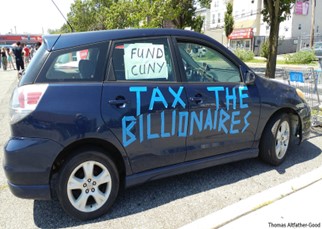
Liberals relish complaining how much wealth billionaires are amassing and how little they pay in taxes. The actual question is why haven’t the liberals in Congress and the Whitehouse done anything about it.
The Democrat party has simultaneously controlled Congress and the Whitehouse on three occasions since 1992. During those years a Congress controlled by the Democrat party and Presidents Clinton, Obama and Biden could have massively increased taxes on billionaires to offset the equally massive increases in social programs and domestic spending enacted by those same Democrat Presidents and Congress. They had the absolute power so why didn’t they do it? Well, simply because they did not wish to bite the hand that feeds them.
Billionaires are billionaires because they are very, very smart. By spreading their many millions in political contributions (directly and through PACs) across candidates from both parties, they essentially ensure neither party will cross the line.
Combine this fact with the realization shared by both parties that talking meaningful spending cuts (unless you are a congressperson from a very solidly conservative district) is political suicide and foretells no end to the spending well beyond actual tax receipts.
The other complaint by liberals is “trickle-down economics” is a lie. The fact is the success we all have enjoyed in a system of democratic capitalism is trickle-down. Simply, the wealthy invest their wealth in corporate enterprise that creates employment for ALL OF US where our hard work yields wealth creating opportunities (for us and the investors) and so on. Government creates employment at the expense of wealth creation through tax collection.
This does not speak to the community good done by the billions in charitable contributions from the wealthy. This, in addition to the many billions in taxes paid by the wealthy.
So, when you ask out loud why billionaires do not pay more in taxes, ask your Democrat Congressperson, Senator or President why they haven’t raised taxes on billionaires when they had EVERY opportunity to do so, multiple times!
Baby Boomers have enjoyed a once in a millennia experience. The post World War II period from the early 1950s well into the 2000s was an unprecedented time of American prosperity and living lives filled with life, liberty and the pursuit of happiness as our founding fathers had envisaged. These generational experiences were born of freedom from existential, global threats. These threats came first from economic depression, then mid-century fascism, followed quickly by the spread of communism. All largely defeated by the Greatest Generation across all the allied powers both militarily and economically.
The American economy benefited greatly from technological advances and leading-edge industrialization creating the most robust and successful period of broadly achieved wealth creation in world history. The American educational experience was by far the best in the world. Healthcare benefited from new technology, the launch of the world leading pharmacological industry and the best medical education system globally. Simply said, things were very, very good for the vast majority of American citizenry. Opportunities for living the American Dream were the best in our history.
Although racism was unfortunately still prevalent holding back certain classes of American society in the early post-war period, those from disadvantaged classes who had the intestinal fortitude to fight for their share of the dream also experienced substantial success. Certainly enough success to offer hope. Further progress came from governmental efforts to outlaw discrimination in the 1960s. These historically significant events, to a recognizable degree, opened the doors further for opportunity, and incremental success finding its way into these disadvantaged classes. Obviously more needed to be done and has been done in the decades since the civil rights and anti-poverty legislation of the 1960s. Trillions in wealth transfer programs have certainly done a great deal to lift up economically and educate millions.
The world was not without existential threats during these fifty years since the early post WWII period. Soviet Russia alongside its satellite nations, as well as other fellow authoritarian states, presented a credible threat of violent challenges to democracy and capitalism through the spread of communism. The possibility of global conflagration threatening to end the promise of freedom that modern capitalistic democracy had brought to the world. The creation of NATO, and other alliances among democratic nations across the globe, held an impenetrable bulwark to communism and authoritarian expansionist threats.
Capitalistic economic success among democratic nations produced the financial resources necessary to deter authoritarian aggression. The pinnacle of this economic success was America and her allies ability to defensively outspend Soviet Russia to the point of the collapse of the “Soviet Union” in the early nineties releasing the soviet satellite states of eastern Europe from Russia’s iron grip. This collapse enabled the former Soviet bloc nations to democratize and, in many cases, join NATO. Since the demise of the “Soviet Union”, the former satellite states have adopted democratic capitalism and have flourished in freedom and economic success, many joining the European Economic Union.
While these globally significant events were occurring, American technological economic dominance continued to strengthen producing stock market growth now shared by many more among the American middle class and unprecedented wealth creation on a significantly wider scale. Admittedly, there were setbacks as have occurred as the result of unfettered market forces. These fluctuations, as loosely predicted, represent both misfortune and opportunity that are the known characteristics of free market economies. As also predicted, economic freedom favors those with a longer term perspective.
Given all these events and considerations, Baby Boomers are the beneficiaries of, to date, the greatest economic success in history. In addition to this monumental economic success, freedoms in social, religious, and governmental pursuits, during this same time period, allowed the vast majority of American citizens to enjoy life fully on a scale never experienced before, anywhere, at any time in human history. The mere possibility of this unprecedented period of prosperity is largely due to the sacrifices made by the Greatest Generation. These tough, resilient and brave men and women pulled us through the Great Depression and, in sacrificing millions of lives, the winning of WWII. No words can express the appreciation the Baby Boomers feel for the “investment” the Greatest Generation made in the furthering of the American Dream. Our hearts and our tears….
As the Boomers age-out (many have died and many more will die in the next decade), the last twenty plus years have presented challenges that both bolster our faith and mystify our perspective on how to deal with the current set of challenges we face as an American society. As the generation who benefited the most from the sacrifices of the Greatest Generation, many frequently reflect on the reverence of the monumental benefit to human existence that Judeo-Christian values (born of Judaism and Christianity) and democratic capitalism have bestowed upon the world across multiple nations, races, tribes and other societal variations. These values lead us to do unto others as we desire to be treated and the absolute truths of the ten commandments should ideally guide all human interaction. Not to ignore the contribution of others but the benefits of Christianity upon American society, as well as many other societies on the world stage, are unmeasurable. Although imperfect, democratic capitalism has brought the highest quality of life to more humanity than any other system ever conceived.
So why do we feel unsettled and essentially disappointed with human conduct in recent times? Why does it seem as though violent crime and horrific acts of inhumanity are on the increase? In part because younger generations feel less influenced or governed by the rule of law and the rules of decent human conduct. These constructs have largely been imprinted on our consciousness by religious teachings of peace and love guided by parents who live these values. Even simple things like the rules of the road, respect for law enforcement professionals and even respect for ones parents are so often ignored. Admittedly there are flaws in all of these constructs. Christianity’s Bible and associated religious sects are in fact human creations and therefore certain to have failings. Yet what is the acceptable alternative that works to avoid aberrant behavior, violence and evil? It leaves one to wonder where do so many young people learn these abhorrent behaviors. In the vast majority of instances, negative influence from social media is a predominant source.
For hundreds and even thousands of years these “rules” have led to peaceful, civil, human conduct only interrupted by evil’s unchecked power. When these rules are widely and willingly adhered to, and or enforced, then unfettered forces of evil cannot exist to a great extent. Yet they do exist because those who seek and live by peace and good find armed enforcement abhorrent and the last resort. The funders of terrorism, both against their own people and their perceived enemies, such as Iran (including their proxies Hamas and Hezbollah), Syria, Afghanistan, North Korea and Russia, among others, find peace, liberty, and choice abhorrent because it challenges their leader’s stranglehold on absolute power. Violence and oppression are these despots’ primary governance constructs.
For nearly two hundred and fifty years, powerful forces for oppression and evil have challenged America’s willingness to do what is necessary to defend our chosen path of liberty, a government by the people and democratic capitalism. Quite often, America has made very painful sacrifices to assist other nations with similar dreams. Many of those nations have banded together with us to strengthen the resolve for freedom. The American dream lives on because of the ultimate sacrifice by so many. Most of these existential threats have come from outside our nation. Never before has the dream been under such intense pressure from within.
Some would argue that the greatest danger comes from those able to gain entry, often illegally, to our country. There are real, credible concerns for violent criminals and terrorism’s perpetrators to gain entry to the United States through our porous southern border. The truth is most crossing the border are those who bring with them a Christian faith with adherence to principles of love, peace and family. They are also seekers of the American Dream who wish to find honest work, care for their families, build wealth and even become entrepreneurs. We do not hear constant cries of victim status or discrimination. (Aside from the almost universal presence of Latino peoples among these southern border immigrants, these same descriptors apply to Asian immigrants as well.) Instead, we see solid traditional nuclear family units, demonstrations of religious faith and a desire to work hard to achieve individual and family economic success. How would we not want these hard working, God-fearing people to become American citizens? So many have become members of the military, law enforcement, governmental leadership and commerce. All of whom will stand up to protect and participate in the continuing realization of this greatest dream.
Tort lawyers are leading the bereaved down a rosy path suing drug manufacturers for overdose deaths that have so many possible causes. The primary reason for these deaths is found quite often in the home of the deceased. In a significant number of these cases the death came from counterfeit opioids, illegally obtained, for which the manufacturer bears no responsibility. But, since doctors are not a part of a singular corporate entity that can be easily sued, the greedy lawyers convince the grieving families to sue the “evil drug companies” when the actual responsibility lies with zombie doctors cashing in on the real victims varied maladies or addictions. This, combined with environmental factors present in the personal situation of the decedent, deserves the bulk of the blame.
Tort lawyers play an important role in American society finding justice for those physically injured or otherwise harmed. But they are also a huge part of what is wrong with this country using their litigious powers to wound anyone or anything they view as vulnerable, regardless of actual culpability, to fill their pockets with ill-gotten gain. The mountains of cash received are used to protect themselves from political harm by buying influence with less than ethical politicians.
God help those who have permanent, in-operable sources of daily severe pain. Their plight is made immeasurably more difficult by the negative press and regulatory pressure on physicians who must attempt to help those in legitimate, constant pain.
Shame on the producers at NOVA. We can all agree that the PRC is a technological force to be reckoned with globally. But to explain and, in fact, highlight their successes with such admiration and not spend much more broadcast time also highlighting the dark side is shameful.
The PRC is speeding along the technological arc by using slavery to keep labor cost low. They are a world leader in technology espionage stealing what they cannot or do not wish to buy. They are using technology to become a major global political bully. And lastly for this post today, the PRC uses technology to deny their citizens basic freedoms essentially guaranteeing the eternal existence of their authoritarian, dictatorial governmental system and its leadership.
PBS has always been a broadcasting beacon for human rights. To wrap a halo around the PRCs technological achievements and not, in the same breath, message the dark side of every single one of these accomplishments is a disgrace.
No intellectually engaged person on the planet wishes to prolong the use of fossil fuels any longer than absolutely necessary due to the energy production impact on the planet. Yet to blatantly lie about the near-term benefits of green energy in order to force major change is an inexcusable injustice.
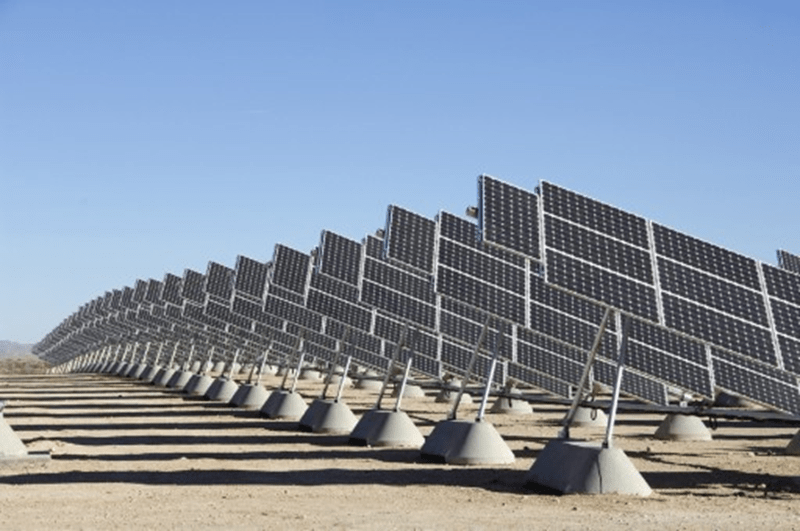
Yes, the sun and the wind are essentially free sources of energy. But what happens when the sun and the wind are unavailable? Yes, natural gas and coal have a material cost as well as a negative carbon impact on the planet. But they offer a reliable source of energy not yet available from green sources. Who in our country would say yes to “Hey, when the sun and the wind are unavailable or aren’t enough to meet demand, would you mind if we shut off your energy power sources for a few hours or days?” Okay, all that food you just bought at Trader Joes….gone. The pipes froze and burst causing tens of thousands of dollars in damage are just a couple examples of what one might expect without reliable sources of energy.
The plan must be comprehensive and lead to the result we want without making outrageously ridiculous demands. For example, would you be okay with years of 50% increases in your energy bills to supplement your energy producers need to buy energy on the spot market until the technology is economically viable to store energy produced by green sources when supply exceeds demand?
To effectively educate yourself further please read this brief editorial piece from the Las Vegas Review-Journal and share your thoughts.
Where are the green energy savings?
LAS VEGAS REVIEW-JOURNAL There’s a major disconnect between what renewable energy backers promised and the current cost of electricity.
One of the justifications for green energy mandates is that solar and wind power are cheap. Carbon Brief, a climate-focused website, triumphantly declared that solar energy is “cheaper than coal and gas in most major countries.”
Putting aside the massive subsidies for renewables that make this true in places, there’s an intuitive appeal to this claim. Natural gas and coal cost money. The sun and wind are available for everyone. If the cost of building a solar or wind plant is cheap or heavily subsidized, power costs to the consumer should theoretically come down.
Nevada, like many states, has embraced this idea. The legislature and voters have determined that the state generate 50% of its power from renewable sources by 2030. But the promised savings haven’t materialized. Consumers have been protesting soaring power bills for months.
It’s not just here. California has long been one of the most aggressive states in pursuing green energy. But its electricity rates are 80% higher than the national average. Things are so bad that its three largest utilities want to charge consumers variable rates based on income.
The same thing is happening around the world. The United Kingdom spent years building off – shore wind farms. Surely, its electricity prices plummeted as a result. Nope. It now has some of the highest power prices in Europe.
The reason is no mystery. Solar and wind plants can produce cheap power, but they can’t produce reliable power. That’s a problem because people aren’t fans of rolling blackouts. To keep the power on, utilities have to rely on natural gas, coal or nuclear plants. Hydropower is great, but hardly scalable.
Having to build, maintain and run a backup power plant significantly reduces the cost savings that comes from not needing to purchase fuel for solar and wind plants. There’s more. Solar and wind power plants are often cheaper when they are producing power. This, along with the cost of complying with new regulations, has led to many conventional power plants closing.
But when solar and wind stop producing, utilities have to buy power on the spot market. And with less conventional power being generated, those prices can spike to extreme levels.
They’re so high that NV Energy says it will save money by spending $350 million to build two natural gas turbines that will run fewer than 700 hours a year. Green energy advocates promised cheap power. Look at your bill. They haven’t delivered. The technology isn’t there yet.
Liberals, Progressives and even middle-of-the-road Democrats, if you are interested in the truth read on. If you have no interest and just wish to live in your CNN, NBC, MSNBC, et al, Chuck Schumer, Joe Biden “we are always right and conservatives are nothing but hate mongering, gun toting, racist savages” bunker then please go back to whatever it was you were doing. But, if you believe we cannot go on spending trillions we do not have, then let’s talk.
First, spend three minutes reading this editorial piece from the Las Vegas Review Journal as a primer.
WHAT OTHERS ARE SAYING
Inflation Reduction Act Will Add to the Deficit
LAS VEGAS REVIEW-JOURNAL
Massive government spending programs typically cost more than projected. At some point, one might even call it a pattern.
The latest example is the ill-named Inflation Reduction Act, which Democrats rammed through last August. The main thrust of the legislation was to push a radical green agenda. It included consumer tax credits for electric vehicles and roof-top solar. The bill gave corporations access to hundreds of billions in tax credits for clean energy projects. It also provided the U.S. Department of Energy $12 billion to craft a new loan program for replacing and upgrading energy infrastructure.
Democrats wanted to convince the public that massive subsidies for otherwise unattractive renewable energy projects would reduce the nation’s debt. The bill also boosted funding for the IRS. In theory, increased enforcement would increase tax collections.
That was supposed to net the government $130 billion over 10 years. The legislation raised corporate taxes by more than $200 billion. It allowed Medicare to negotiate prices of prescription drugs. The Tax Foundation projected drug pricing provisions would save almost $300 billion over the decade.
At the time, the White House estimated the bill would reduce the deficit by $300 billion over the next decade. President Joe Biden declared, “We’re cutting the deficit to fight inflation by having the wealthy and big corporations pay part of their fair share.” Hold on to your hats, but that’s not happening. Shocker.
“Originally, this was supposed to be a deficit reducer, but now it has flipped. Instead of reducing the debt, it will add to it,” Kent Smetters, the faculty director of the University of Pennsylvania’s Wharton Budget Model, said. He projects the bill will add $750 billion to the defi cit.
Why? Because people respond to incentives. The bill didn’t include caps on many tax credit provisions. Individuals and companies are rushing to take advantage of that “free money.” For instance, Tesla reduced its prices to make its vehicles eligible for the tax credit.
The costs of the tax credits were initially projected to be under $390 billion. Penn Wharton’s model now suggests the credits will total more than $1 trillion. The cost of the electric vehicle tax credit alone is now likely to top the initial estimate for all the tax credits.
The revenue raising provisions face challenges, too. Republicans have opposed hiring new IRS agents. Analysts are unsure when a new 15 percent corporate minimum tax will start producing revenue as companies use COVID losses to offset taxes. Lawsuits may prevent Medicare from negotiating drug prices.
Democrats can cover their ears if they like, but reducing the deficit is going to require spending restraint, not using statistical games to low-ball the cost of the cost of new green handouts.
LAS VEGAS REVIEW-JOURNAL
So, when you had control of all of government, like you did recently, why didn’t you raise taxes enough to cover all your spending programs and pay for our national debt service? The rich can afford it, right? Millennials won’t need as much Social Security or Medicare, right?
You want to cut defense spending while the Chinese, Russians, Iranians and North Koreans are gunning for us with everything they have. Is that a gamble you are honestly willing to make?
You are not doing ANY of these things because…they are political suicide!
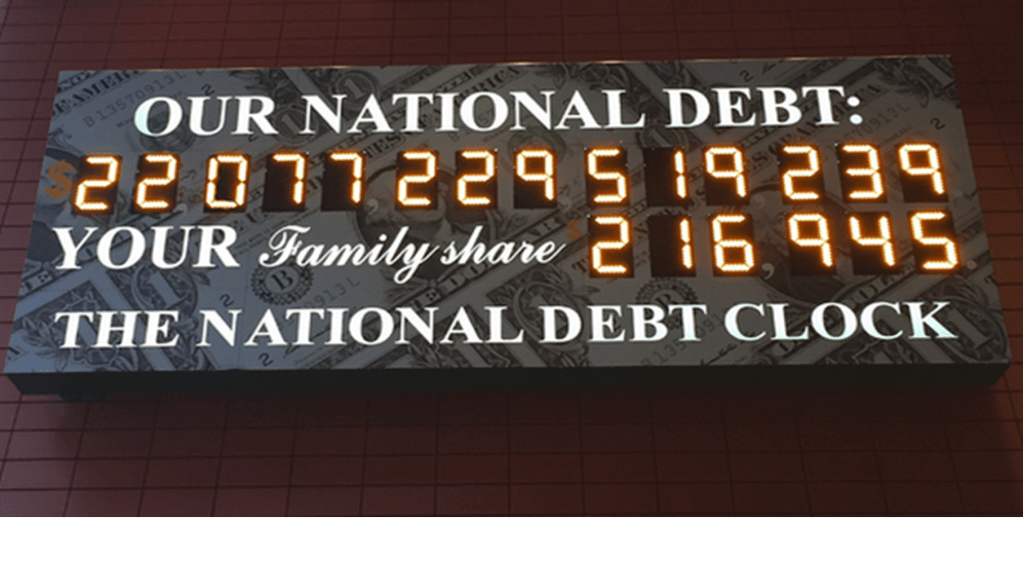
So, instead, we are very s-l-o-w-l-y committing financial suicide as a nation. Because, by the time we drum up enough political will to actually tax the right amount and reduce spending to the right amount to not completely implode our economy and form of government, it will be too late. When the debt service cost on the enormity of the national debt exceed our ability to pay, when combined with our rapidly worsening and completely out of control spending, it will exceed the aggregate total of the wealth of everyone in our nation. The economy will cease to function as all of the invested wealth (that’s everyone’s, EVERYONE’S, the wealthy, your 401K, my retirement savings, everyone’s) will not be enough to service the debt, support current government spending and invest enough to create the jobs necessary to sustain positive economic activity.
So, what must we do? Simple, come together before it’s too late, and develop a long term plan that makes everyone unhappy but averts complete disaster.
Mortgages for those who cannot afford them and “taxation” without legislative mandate. More blind and unadvisable financial market moves by the clueless Biden Administration.
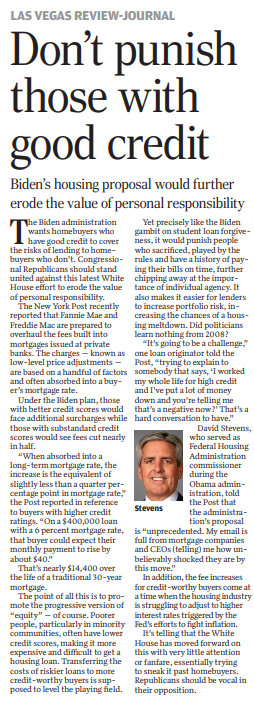
While we in the US wring our hands and whine about how miserable our record is in reducing carbon emissions, the rest of the world is thumbing their nose at the problem. While we build massive solar and wind energy facilities and work to scrub clean what little CO2 is oozing from our remaining traditional electric generating facilities, the world is building coal-fired plants at an increasing pace (see below).
Coal capacity climbs worldwide despite promises to slash it
SIBI ARASU Associated Press
Apr 9, 2023
The capacity to burn coal for power went up in 2022 despite global promises to phase down the fuel that’s the biggest source of planet-warming gases in the atmosphere, according to a new report.
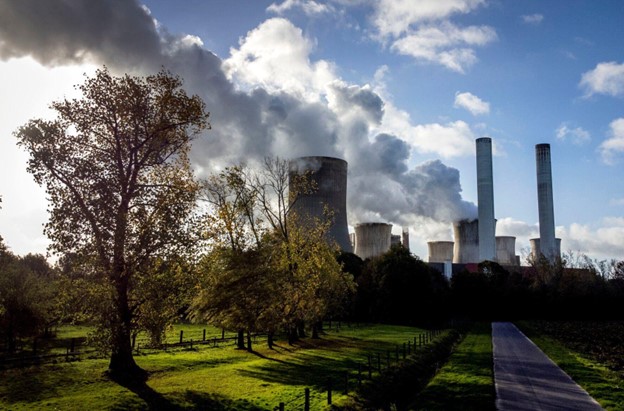
Steam rises from the coal-fired power plant Nov. 2, 2022, in Niederaussem, Germany.
Michael Probst, Associated Press
The coal fleet grew by 19.5 gigawatts last year, enough to light up around 15 million homes, with nearly all newly commissioned coal projects in China, according to a report by Global Energy Monitor, an organization that tracks a variety of energy projects around the globe.
That 1% increase comes at a time when the world needs to retire its coal fleet four and a half times faster to meet climate goals, the report said. In 2021, countries around the world promised to phase down the use of coal to help achieve the goal to limit warming to 1.5 degrees Celsius (2.7 Fahrenheit).
“The more new coal projects come online, the steeper the cuts and commitments need to be in the future,” said Flora Champenois, the report’s lead author and the project manager for GEM’s Global Coal Plant Tracker.
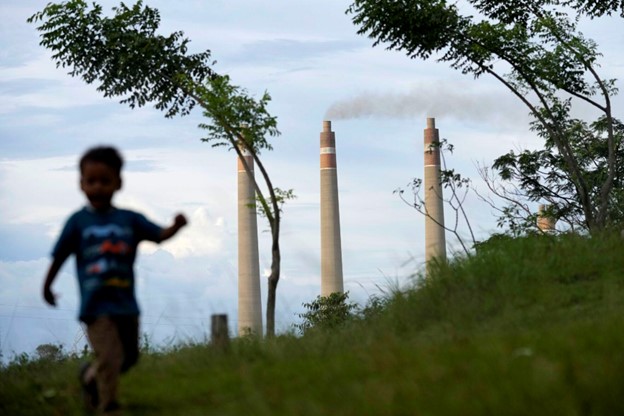
A young boy plays on a hill called “Teletubbies Hill,” a locally popular tourist attraction, as the chimneys of Suralaya coal power plant loom in the background, Jan. 8 in Cilegon, Indonesia.
Dita Alangkara, Associated Press
New coal plants were added in 14 countries and eight countries announced new coal projects. China, India, Indonesia, Turkey and Zimbabwe were the only countries that both added new coal plants and announced new projects. China accounted for 92% of all new coal project announcements.
China added 26.8 gigawatts and India added about 3.5 gigawatts of new coal power capacity to their electricity grids. China also gave clearance for nearly 100 gigawatts of new coal power projects with construction likely to begin this year.
But “the long term trajectory is still towards clean energy,” said Shantanu Srivastava, an energy analyst with the Institute for Energy Economics and Financial Analysis who is based in New Delhi. Srivastava said the pandemic and the war in Ukraine temporarily drove some nations toward fossil fuels.
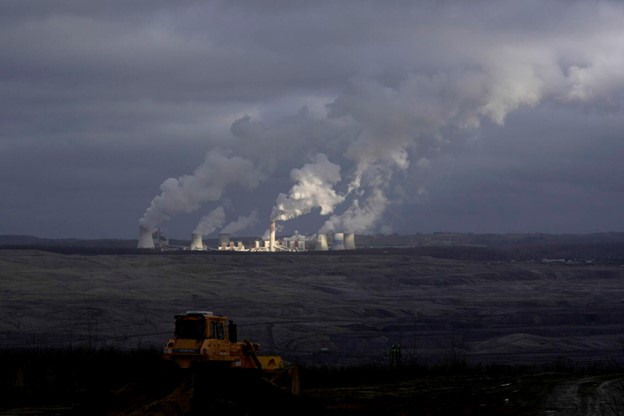
Steam rises from a power plant located by the Turow lignite coal mine Jan. 15, 2022, near the town of Bogatynia, Poland.
Petr David Josek, Associated Press
In Europe, where the Russian invasion of Ukraine meant a scramble for alternative energy sources and droughts stifled hydropower, the continent saw only a minor increase in coal use.
Others went the other way. There were significant shutdowns in the U.S. where 13.5 gigawatts of coal power was retired. It’s one of 17 countries that closed plants in the past year.
With nearly 2,500 plants around the world, coal accounts for about a third of the total amount of energy installation globally. Other fossil fuels, nuclear energy and renewable energy make up the rest.
To meet climate goals set in the 2015 Paris Agreement, coal plants in rich countries need to be retired by 2030 and coal plants in developing countries need to be shut down by 2040, according to the International Energy Agency. That means around 117 gigawatts of coal needs to be retired every year, but only 26 gigawatts was retired in 2022.
“At this rate, the transition away from existing and new coal isn’t happening fast enough to avoid climate chaos,” said Champenois.
Srivastava added that it’s important to make sure the millions employed in coal and other dirty industries are not left behind when transitioning to clean energy, although that gets more difficult the more coal projects get locked in.
“Every day we delay a transition to clean energy,” Srivastava said, “it not only makes it harder to achieve climate goals but it also makes the transition more expensive.”
While we build and sell increasing numbers of electric-powered vehicles (which will create a couple new, difficult to solve problems) we continue to place ourselves at the mercy of the world largest oil producers. We have the capacity to out produce these fascist, authoritarian, terrorist-supporting governments and vastly diminish their geopolitical threats and war-making ability while reducing the pain our citizens are experiencing in having to choose between gas to drive to work and food for their children. All while simultaneously marching effectively to vastly, vastly reduced carbon emissions in this country in the next 10-15 years. WE CAN DO BOTH but choose not to for strictly political reasons! This as the Saudis are spending billions of our oil money on creating, of all silly things, a competing professional golf tour; while the Iranians are sponsoring terrorism; and the Russians spend billions of their oil-riches making war on the innocents of Ukraine.
Recently the Saudis decided to reduce oil production to raise oil/gas prices and fuel global inflationary pressures yet again (see this article below – Saudis, other oil giants announce surprise production cuts ) We are powerless to do anything about it because we, the Biden Administration, choose to dramatically constrain oil drilling and production on this continent because he fears the progressive left will abandon him for the 2024 election.
The rest of the world secretly laughs at our weakness and ineptitude in using the resources necessary to end this global extortion by these narcissistic, self-serving tyrants. Again, this can all be done while we pour billions upon billions into technology and innovation to both reduce carbon emissions and create the means to mitigate its effects on the planet.
Once we have assumed a leadership position and can control global oil pricing, we can squeeze the Chinese, Indians, Indonesians, et al into a descending not increasing number of coal-fired electric production facilities. We can make natural gas, a far cleaner resource, a more economic fuel by reducing the global price below that of coal as we incentivize these countries to go solar and wind production and have a massively greater impact on CO2 emissions in the next 10-15 years then focusing on what will be diminishing returns here from their domestically focused protests.
Saudis, other oil giants announce surprise production cuts
• ASSOCIATED PRESS
• Apr 2, 2023
DUBAI, United Arab Emirates — Saudi Arabia and other major oil producers on Sunday announced surprise cuts totaling up to 1.15 million barrels per day from May until the end of the year, a move that could raise prices worldwide.
Higher oil prices would help fill Russian President Vladimir Putin’s coffers as his country wages war on Ukraine and force Americans and others to pay even more at the pump amid worldwide inflation.
It was also likely to further strain ties with the U.S., which has called on Saudi Arabia and other allies to increase production as it tries to bring prices down and squeeze Russia’s finances.
Saudi Aramco engineers pass by a gas turbine generator at Khurais oil field during a tour for journalists June 28, 2021, about 93 miles east-northeast of Riyadh, Saudi Arabia.
Amr Nabil, Associated Press
The production cuts alone could push U.S. gasoline prices up by roughly 26 cents per gallon, in addition to the usual increase that comes when refineries change the gasoline blend during the summer driving season, said Kevin Book, managing director of Clearview Energy Partners LLC. The Energy Department calculates the seasonal increase at an average of 32 cents per gallon, Book said.
So with an average U.S. price now at roughly $3.50 per gallon of regular, according to AAA, that could mean gasoline over $4 per gallon during the summer.
However, Book said there are a number of complex variables in oil and gas prices. The size of each country’s production cut depends on the baseline production number it is using, so the cut might not be 1.15 million. It also could take much of the year for the cuts to take effect. Demand could fall if the U.S. enters a recession caused by the banking crisis. But it also could increase during the summer as more people travel.
Even though the production cuts are only about 1% of the roughly 100 million barrels of oil the world uses per day, the impact on prices could be big, Book said.
“It’s a big deal because of the way oil prices work,” he said. “You are in a market that is relatively balanced. You take a small amount away, depending on what demand does, you could have a very significant price response.”
The Saudi Energy Ministry said its own reduction of 500,000 barrels per day would be made in coordination with some OPEC and non-OPEC members, without naming them. The cuts are in addition to a reduction announced last October that infuriated the Biden administration.
The ministry described the move as a “precautionary measure” aimed at stabilizing the oil market. The cuts represent less than 5% of Saudi Arabia’s average production of 11.5 million barrels per day in 2022.
Iraq said it would reduce production by 211,000 barrels per day, the United Arab Emirates by 144,000, Kuwait by 128,000, Kazakhstan by 78,000, Algeria by 48,000 and Oman by 40,000. The announcements were carried by each country’s state media.
Russia’s Deputy Prime Minister Alexander Novak, meanwhile, said Moscow would extend a voluntary cut of 500,000 until the end of the year, according to remarks carried by the state news agency Tass. Russia had announced the unilateral reduction in February after Western countries imposed price caps.
All are members of the so-called OPEC+ group of oil exporting countries, which includes the original Organization of the Petroleum Exporting Countries as well as Russia and other major producers. There was no immediate statement from OPEC itself.
The cuts announced in October — of some 2 million barrels a day — had come on the eve of U.S. midterm elections in which soaring prices were a major issue. President Joe Biden vowed at the time that there would be “consequences,” and Democratic lawmakers called for freezing cooperation with the Saudis.
Both the U.S. and Saudi Arabia denied any political motives in the dispute.
Since those cuts, oil prices have trended down. Brent crude, a global benchmark, was trading around $80 a barrel at the end of last week, down from around $95 in early October, when the earlier cuts were agreed.
Analysts Giacomo Romeo and Lloyd Byrne at Jefferies said in a research note that the new cuts should allow for “material” reductions to OPEC inventory earlier than expected and could validate recent warnings from some traders and analysts that demand for oil is weakening.
Kristian Coates Ulrichsen, a Gulf expert at Rice University’s Baker Institute for Public Policy, said the Saudis are determined to keep oil prices high enough to fund ambitious mega-projects linked to Crown Prince Mohammed bin Salman’s Vision 2030 plan to overhaul the economy.
“This domestic interest takes precedence in Saudi decision-making over relationships with international partners and is likely to remain a point of friction in U.S.-Saudi relations for the foreseeable future,” he said.
Saudi Arabia’s state-run oil giant Aramco recently announced record profits of $161 billion from last year. Profits rose 46.5% when compared with the company’s 2021 results of $110 billion. Aramco said it hoped to boost production to 13 million barrels a day by 2027.
The decades-long U.S.-Saudi alliance has come under growing strain in recent years following the 2018 killing of Saudi dissident Jamal Khashoggi, a U.S.-based journalist, and Saudi Arabia’s war with the Iran-backed Houthi rebels in Yemen.
As a candidate for president, Biden had vowed to make Saudi Arabia a “pariah” over the Khashoggi killing, but as oil prices rose after his inauguration, he backed off. He visited the kingdom last July in a bid to patch up relations, drawing criticism for sharing a fist bump with Crown Prince Mohammed.
Saudi Arabia has denied siding with Russia in the Ukraine war, even as it has cultivated closer ties with both Moscow and Beijing in recent years. Last week, Aramco announced billions of dollars of investment in China’s downstream petrochemicals industry.