
Who wouldn’t want a cushy life? This is not a description of the life of the rich
and famous, cushy as it may appear. That life is one you are born into, or,
having the ability (as well as the grit and good fortune) to turn a bit of brilliance
into the American dream. No, this is not
about that.
This is more about that other American dream. The one where you work hard. Not just at your job but the harder work of
making a better life. It starts early in
life with good parental guidance. Working
hard at school to have a shot. Working hard
on becoming a better person. Working hard,
really hard, on life skills to give yourself the tiniest of openings.
And let’s say you, with great tenacity and decent intellect,
manage to squeeze through that crack. Well
that’s not the end, its just the beginning!
Even with a decent start, and an amazing spouse/life partner by your
side, the slaps in the face and the gut punches just keep coming. The tests of your character, intestinal fortitude,
integrity, physical stamina and intelligence are one tsunami after another the
rest of the way……..until your eyes close for the last time.
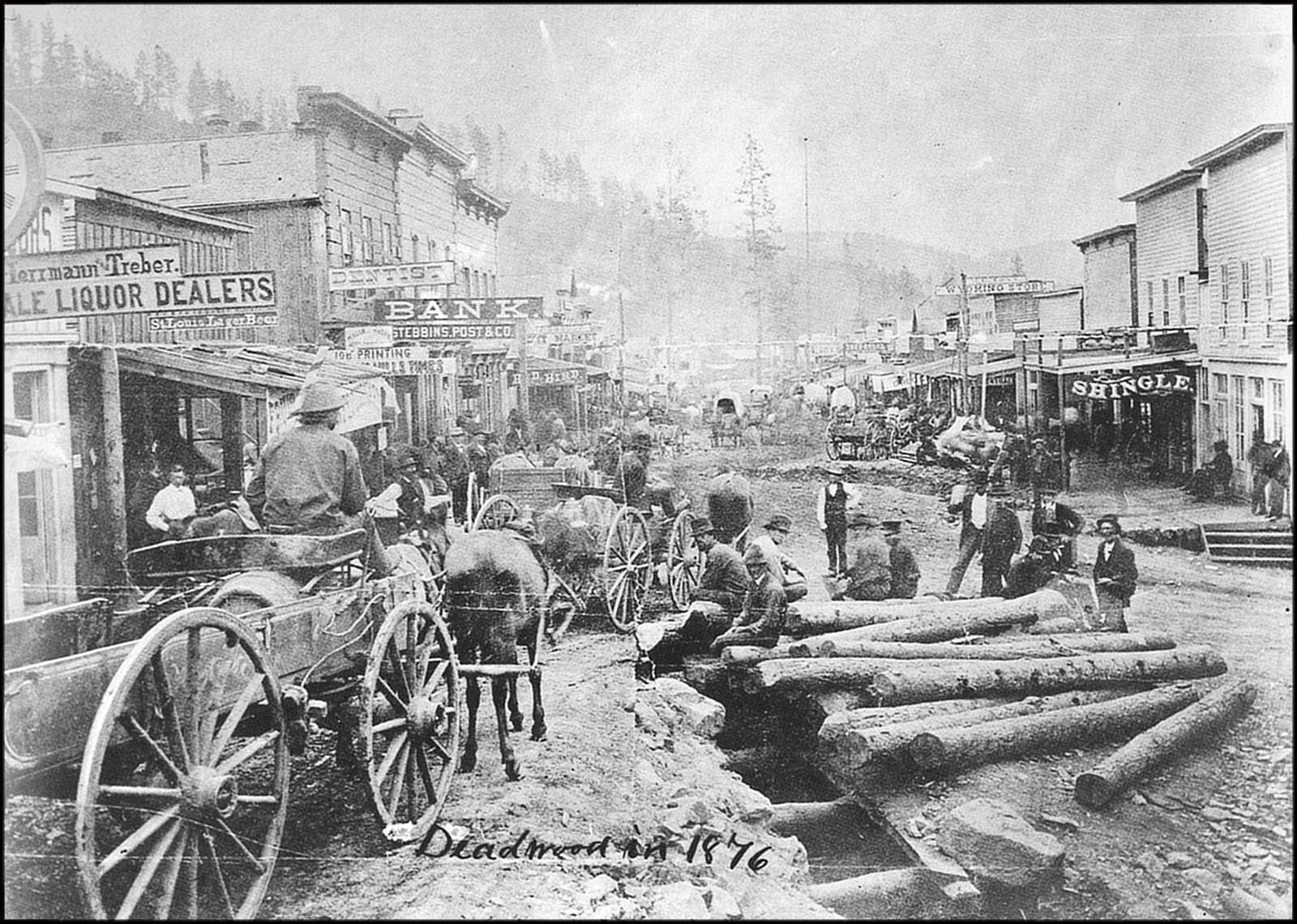
In this following excerpt of the script from the television
series “Deadwood” Season 2 episode 19, one of these tsunami-like challenges has
come the way of the owner of the camp’s newspaper The Pioneer. In raw, Americana
Shakespearean prose the last paragraph crystalizes this notion most succinctly.
(Early morning at the
camp, we see Al open a door…)
Al: Did you know this fucking walkway
connected us?
Merrick: (Sitting below, at his desk at the Pioneer) Several
of your patrons, in different stages of undress, have illuminated me.
Al: (Closes door) What happened there? (Walks downstairs)
Merrick: Not only was my press disabled, but my office was ransacked
and feces mounded in the corner. A
message of objection to my handling of Yankton’s notice on the claims.
Al: Posting
rather than publishing, huh?
Merrick: The camp’s new school teacher, a lovely woman, was so
traumatized by what happened that she left!
Al: Cy
Tolliver.
Merrick: Who didn’t even trouble, when confronted, to deny it.
Al: (Sits, lets out a sigh) Why ain’t you up
and running again?
Merrick: I’m in despair. The
physical damage is repairable, but the psychic wound may be permanent.
Al: (Leans forward, concern on his face.) You
ever been beaten, Merrick?
Merrick: (Rolls his eyes) Once,
when I thought I had the smallpox, Doc Cochran slapped me in the face. (Al slaps him quickly) Ah! (He stares at Al, touching his cheek – he
leans forward) Stop it, Al.
Al: Are
you dead?
Merrick: Well, (touches cheek) I’m
in pain, but no, I’m obviously not dead.
Al: And
obviously you didn’t fucking die when the Doc slapped you.
Merrick: No.
Al: So
including last night, that’s three fucking damage incidents that didn’t kill
you. Pain or damage don’t end the world,
or despair or fuckin’ beatin’s. The
world ends when you’re dead. Until then,
you got more punishment in store. Stand
it like a man—and give some back.1
Besides the brilliance of the writing, acting and production
design of Deadwood, it brings a wide-eyed, lucid parable to the screen about
truth. Deadwood is both a wistful window
and a harsh portrait that Shakespeare would find admirable. Its most prophetic message
is about the truth. The truth that “free”
is more than a myth, it’s a dangerous lie of evil origin. Only hard work, risk-taking (amid many imminent
potentially “deadly” dangers), some good fortune, an ability to ride the many
ups-and-downs, and an impenetrable resolve to succeed brings the mere
possibility of survival and a good life.
Anyone……anyone…..politician, parent, professor, priest, rabbi, Imam, et al, who promises anything but a life mostly filled with struggle, especially in America (despite the delusional impression widely held outside this country, “easy street” it aint), is betraying whatever trust may exist with the person at hand. Preparation for that struggle, physically, psychologically, educationally only affords you a shot at squeezing through that crack. Then its all uphill from there……
“There’s no question
about it: the corporate conservatives and their allies in the political and
religious right are achieving a vast transformation of American life that only
they understand because they are its advocates, its architects and its beneficiaries,
in creating the greatest economic inequality in the advanced world, they have
saddled our nation, our states and our cities and counties with structural deficits
that will last until our children’s children are ready for retirement and they
are systematically stripping government of all its functions except rewarding
the rich and waging war.”
Bill Moyers
I am certain Mr. Moyers is a fine human being, but these gross
exaggerations are not only inaccurate but serve to inflame and diminish the
possibility of honest dialogue between the parties who must work together to
solve the systemic problems of this nation.
Please, regardless of your political affiliation, hear me out to the end
of this short piece.
Some simple facts.
Cities, counties and states are statutorily
prohibited from operating budgets containing deficits. Every budget, every year must be balanced.
Nearly 70%3 of the annual federal
spending goes to the administration and delivery of wealth transfer programs like
Social Security, Medicare, Medicaid, and so-called welfare programs including
cash assistance, healthcare and medical provisions, food assistance, housing
subsidies, energy and utilities subsidies, education and childcare assistance,
and subsidies and assistance for other basic services administered either at
the federal or state and local level.
That means 70% of deficit spending goes toward
these expenditures. Actually, these
expenditures represent much more of the deficit if you remove defense spending,
the Supreme Court and law enforcement, as well as the cost of the legislative &
executive branch, all constitutionally mandated functions of the federal government.
More federal debt, approximately 9 trillion, was
accumulated during the Obama administration than the deficits accumulated by any
previous administrations by trillions.1
The current total federal debt is approximately 20
trillion which exceeds the entire U.S. annual GDP (hopefully that scares the pants
off you). The current federal spending
is approximately 4.5 trillion on revenues of 3.4 trillion.2
In round figures the top 1% most wealthy have an
average net worth of approximately 10 million dollars. If the
top 1% of the population is approximately 3.3 million people then their total
approximate wealth is 33 trillion.
If you taxed the top 1% with a 10% wealth tax (well,
first of all, you would unequivocally collapse the economy in an apocalyptic
fashion, but for argument sake let’s say a socialistic president and legislature
took power and enacted such a wealth tax) that’s 3.3 trillion per year in additional
tax revenue. If not a single additional dollar
in federal spending were enacted, not “free” healthcare, “free” college”, the
green new deal, none of it, it would be nearly a decade for the total federal debt
to be paid back with federal spending frozen at the current level.
So lets face facts, none of that is going to happen. Collapsing the economy in that way serves no one. Given this reality, what can be done to address social justice issues like income disparity, the cost of education, the cost of healthcare and other topics like climate change? Two primary realities must be addressed. How do we raise taxes enough on the ultra-wealthy to reduce deficit spending to a manageable level and squeeze out enough after that to begin to reasonably fund programs to address the social injustice issues without driving the economy into recession? Of course, the trend line in deficit spending and the cost of social programs like Social Security and Medicare must be bent by affecting benefits for future generations. Because even a reasonable tax on the ultra-wealthy will not prevent insolvency for those programs.
That’s it. Anything more radical than that, like re-raising taxes on businesses, would only serve to reduce GDP that will reduce tax revenues and reduce the federal government’s ability to spend more to make things better for those seen as being treated unjustly. It has to be a reasonable plan that will probably take five to ten years to have a significant, measurable impact and not drive us into a low growth, high tax, perpetual state of misery, Euro-style economy where nothing material is accomplished. Just ask the French how it’s going.
And there are those, economist and politician alike, whose incredulity would rupture the Richter scale, that this nation is basically at full employment with GDP in excess of 3% and still producing annual trillion-dollar deficits in federal spending. Some aghast that federal tax revenues approximating 3.5 trillion is not enough to serve the needs of this nation. Others will zero in on this as further evidence that supply-side economics are fantasy. Regardless where you sit on that full spectrum, we are spending a TRILLION DOLLARS MORE EACH YEAR than we collect. If we call it a 30% spending deficit then across the board 30% tax increases will only stop the current bleeding of red ink and offer nothing new in help. The enormity of the problem cannot be overstated.
So Mr. Moyers, can we please set aside the inuendo, the vague fact-free attacks and help us ease into a dialogue that can really start to help people who need it with a reasonable plan that has a real chance to succeed in the long term? If we are going to have any sliver of hope for success, we must demand all the attack dogs (left and right) be silenced, or, minimally ignored, and allow reasonable men and women from both sides to begin material discussions about what is fiscally feasible in addressing the social justice issues before us. Nothing meaningful can be accomplished in one year or maybe even one term but certainly in the next decade we can do what Americans have always done……find a way.
It appears the most progressive members of society are in a frenzied
rush to homogenize all the world’s people.
They want to eliminate any sort of ethnic identity. Their assertion is that ethnicity is at the root
of all the troubles with the world. The
assumption is this will create a world where someone’s appearance or religion
or ethnic origin is indiscernible from the next person. A world where ethnicity, race and even
physical appearance will be blended into a human race devoid of differences. Skin color, eye color, physical stature,
facial features will all disappear as differences into a homogenized, androgynous,
atheist global persona.
This may indeed be a cure for all that ills the human species on this planet, or it may not. They speculate the need for constructs like religion or sovereign states would fade away. Without those constructs war among “tribes” would be devoid of purpose as tribes would only be an artifact of ancient history. That “tribalism” is the root of evil as it may be described.
This notion of tribalism as a source of evil is one
conceived of, or fashioned by, Former President Barrack Obama in his public
addresses on tribalism. Here’s an
example from the Chicago Tribune.
—————————
Obama warns against ‘a crude sort of nationalism’ or
‘tribalism’ taking root in the U.S.
President Barack Obama warned Tuesday that Americans and
people around the world “are going to have to guard against a rise in a
crude sort of nationalism, or ethnic identity, or tribalism” taking root
amid the populist movements that are gaining currency around the world.
“We are going to have to guard against a rise in a
crude sort of nationalism, or ethnic identity or tribalism that is built around
an us and a them, and I will never apologize for saying that the future of
humanity and the future of the world is going to be defined by what we have in
common, as opposed to those things that separate us and ultimately lead us into
conflict,” Obama said.
“Take Europe,” he continued. “We know what
happens when Europeans start dividing themselves up and emphasizing their
differences and seeing a competition between various countries in a zero-sum
way. The 20th century was a bloodbath.”
“In the United States we know what happens when we
start dividing ourselves along the lines of race or religion or ethnicity. It
is dangerous. It is dangerous, not just for the minority groups that are
subjected to that kind of discrimination, or in some cases in the past,
violence, but because we then don’t realize our potential as a country when we
are preventing blacks or Latinos or Asians or gays or women from fully
participating in the project of building American life,” he said.
“So my vision is right on that issue, and it may not
always win the day in the short term in any particularly political
circumstance, but I am confident it will win the day in the long term,”
Obama added. “Because societies which are able to unify ourselves around
values and ideals and character, and how we treat each other, and cooperation
and innovation, ultimately are going to be more successful than societies that
don’t.”1
—————————-
Given a broader perspective, tribalism can be defined in more than one way and devoid of evil intent. Former President Obama’s notion revolves around specific aspects of tribalism (race, religion and ethnicity) that certainly have been an incendiary force or cause of conflict, war and bloodshed between “tribes”. Yet there are also some real positives in tribal affinity.
On a very personal level, members of a tribe e.g., Scandinavians, Jews, Slovaks, Native Americans, Chinese, Mexican, among many, many others, find natural attraction in couples’ relationships, and a sense of personal security, among tribe members. The notion of security is proven and profound. The attraction is deep-seated and multi-faceted. It is physiological and psychological.
In this excerpt from a piece on Psychology Today.com “Are We
Attracted to People Who Look Like Us?”2, the reality of who we are
attracted to and why, finds some scientific basis.
————————
As it turns out, then, we are much more likely to fall for
someone who looks like us or our opposite-sex parent. This may indicate that
our incest taboos are social constructs instituted to prevent people from
following their instincts. However, there are other explanations of why we are
attracted to people who look like us.
Researchers at the deCODE Genetics company in Reykjavik,
reporting in a 2008 issue of Science, found that marriages between third or
fourth cousins in Iceland tended to produce more children and grandchildren
than those between completely unrelated individuals. The researchers suggest
that marrying third and fourth cousins may be optimal for reproduction because
this degree of genetic similarity may produce the best gene pool. Sibling and
first-cousin couples, were they to mate, could have inbreeding problems,
whereas couples genetically far-removed from each other could have genetic
incompatibilities. Third- and fourth-cousin couples, though, tend to be
genetically compatible while having no serious inbreeding problems.
At first glance, such findings seem to go against the
so-called “Westermarck effect,” which posits that people who grow up
together are disposed not to fall in love with each other after they reach
sexual maturity. But the Westermarck effect—based on a series of studies done
by Finnish anthropologist Edvard Westermark—actually is consistent with the
recent findings—living in close proximity is no doubt the decisive factor for
desensitization in terms of sexual attraction, not the degree of the
individuals’ resemblance. in fact, the
Westermarck effect has been confirmed, in the Israeli kibbutz system of
communal living, in which people who grow up together are typically not
directly related to each other and do not look alike. And consider how
traditional sim pua marriages, mostly dating from pre-modern Taiwan, also
confirm Westermarck’s theory: Sim pua means “little daughter in-law.” In
the system, a female infant is given to a family to be reared as their own
daughter. When she grows up, she is to marry a son in that family. But sim pua
marriages have produced a low fertility rate, a high divorce rate, frequent
adultery, and lack of sexual attraction. In some cases, the son or
“daughter-in-law” has refused to marry their destined-for spouse. So,
the degree to which a couple resembles each other could be a defining factor in
relationship satisfaction after all.2
————————-
Not to say this is an absolute, and more frequently than ever successful trans-tribe relationships are occurring. Without a doubt, when the possibility presents itself, do what makes you happy. One of the most important and unique American constitutional rights is the pursuit of happiness. But, none of us should be made to feel as though we are Neanderthals because we have strong positive feelings about our connection to our tribal origins. We are attracted to who we are attracted to, simply as that. We are attracted to potential partners for any number of possible combination of reasons. For centuries attempts to force couple relationships, for political alliance or cultural reasons, nearly always end in disaster and unhappiness. There appears to be strong evidence that this tribal affinity thing is a significant force in who we love, who we are comfortable around, who makes us feel safe and with whom we procreated.
This homogenized, borderless, raceless, religion-free society some desire may be coming our way as humans. Those in the media and the like, that produce the images we all see every day, wish to portray us as well down that path. It just isn’t so. It will have to overcome many millennia of tribalism, deeply seated in our very being, to become the dominant human condition globally.
Seriously, have you thought about it? There, it did it again, where did that last moment just go? We were there, it was as real as anything can be, and now it’s gone. Where in the vast universe and beyond does the past, a second ago and ancient past, go? It has to go somewhere doesn’t it?
Many have tried to explain it. The notion of entropy, in the “arrow of time”,
is presented as an irreversibility. That
the universe is a system with a certain known macrostate order regardless of the
variability of what occurs in the microstate.
That the cosmological arrow of time points in the direction of the
universe’s expansion (above diagram2). It may be linked to the thermodynamic
arrow, with the universe heading towards a heat death (Big Chill) as the amount
of usable energy becomes negligible.1
That the radiative arrow of
time moves away from its source, with a causal arrow of time notion that each
event has a cause with the causal event preceding the event.
,An epistemological problem with using causality as an arrow of time is that, as David Hume maintained, the causal relation, per se, cannot be perceived; one only perceives sequences of events. Furthermore, it is surprisingly difficult to provide a clear explanation of what the terms cause and effect really mean, or to define the events to which they refer. However, it does seem evident that dropping a cup of water is a cause while the cup subsequently shattering and spilling the water is the effect. 1
Physically speaking, the perception of cause and effect in
the dropped cup example is a phenomenon of the thermodynamic arrow of time, a
consequence of the second law of thermodynamics. Controlling the future, or causing something
to happen, creates correlations between the doer and the effect, and these can
only be created as we move forwards in time, not backwards.1
All of this speaks to the
how of time passing but nothing of the location of the past beyond our own
memories. Does it pass into a new
universal dimension? Some papers theorize
that the past does remain physically with us, no different than the present. That the future is out there in the ether
waiting to “happen”. So, if the past is
somehow physically available, how do we, or is it possible to, “visit” the past
as well as the future? These are all notions
considered by what’s called the “A Theorists and the B Theorists”.
The “A Theorists” notions are akin to the Arrow of Time view
with us traveling down a metaphorical “road”.
There is the past, the portion
of the road already traveled, the present, and the future, the portion of the
road yet to be traveled. The A Theorists
propose that the past may be a “real thing” that exists beyond just in our
memory. Those subscribing to a physical
past appear to gain support from the nature of mathematical space-time. The metaphysical view has the past only
existing in memory.
The “B Theorists” in contrast, suggest the past and the
future have the same physical or metaphysical status of existence as the
present. The “Bs” theorize that the future does exist but has an element of indeterminacy,
with a kind of physical free will causality.
It is said that time travel buffs bend more toward the “B” perspective with
a more metaphysical view as time travel presents a number of very difficult
mathematical obstacles.
So, if the past does physically exist could we travel to it? Wouldn’t we have to travel faster than time? If we could travel to the past, in what state
would we be in? If the past were
physical is it still like a photograph or fluid like video or film? Could we interact with it or is it as fixed
as our memory of it?
Future generations may conceive of and create answers to
these many questions, problems and conundrums.
When we stop to think about what just occurred, there, that moment that
just past, whether cosmically consequential or not, it would be fascinating to
know if that moment still exist somewhere not just in our memory.
Although the Virginia General Assembly 2019 session was very
active including passing several bills that can be described as positive for
the commonwealth, there were also a couple important misses. The bills passed must yet either be signed by
the governor or survive veto challenges.
The most important of these is the new budget. The budget had to address the thorny issue of federal tax conformity. What was approved, for the most part, was in the best interest of the commonwealth. Most importantly it achieved the goal of ensuring the governor wasn’t allowed to abscond with a billion-dollar tax increase, that he would have spent primarily on wealth transfer programs, and returned the majority of the unintended tax increase to the taxpayers. In fairness some social programs, much desired by the left, were funded in negotiations with the Democrats. Notable among several other accomplishments of the session is a pilot program to address homelessness at its core by preventing evictions. This could have a backfiring effect in that those wishing to rent their properties will be more risk adverse in selecting potential renters. Homelessness is an ever present and growing problem where remedies for those at risk, and in need of some support to return to regular rent payments, should be made available.
Ranking high on the list of importance was addressing the
issue of redistricting and the legacy of gerrymandering in the state. Efforts to place the 2020 census
redistricting responsibility in the hands of an independent commission appears
reasonable and in line with efforts in other states. Commissions will be as imperfect as the human
beings who inhabit them. But something
had to be done to bring greater fairness back to representation for all
citizens as intended by our founding fathers.
Now to a couple misses that were just so puzzling.
First and foremost among these is the failure to outlaw handheld mobile phone calls while driving a motor vehicle. For all of us who have suffered foolish distracted drivers while holding a mobile phone to their ear, this is the biggest no-brainer of the decade. Handsfree, Bluetooth calls should be allowed but still can be distracting. A kissing cousin to texting (already outlawed), the use of a mobile phone by drivers to do anything requiring use of a keypad (other than handsfree use of a mapping/directional application) should also be made illegal.
The second failure in my mind, certainly not a no-brainer
but loaded with commonsense, was the failure to decriminalize the use of marijuana. Authorizing recreational use may be a “bridge
too far” at this point in Virginia, although there are many sound reasons to
consider this in the near future. But to
create criminality in those who are not doing anything different than what is
possible with alcoholic beverages defies logic.
Over crowded jails and prisons, providing informal schools of
criminality for fresh inmates whose only crime was marijuana use, just exacerbates
the troubles with the already overburdened criminal justice system.
Finally, a mention of disappointment in the retention of the
Pease limitation1 on tax deductions for high earning taxpayers. Eliminated in the new federal tax code,
Virginia’s attempt at federal conformity conveniently failed to eliminate the
Pease limitation. Those who believe high
earning families should pay taxes at a significantly higher rate will cheer
this disparity with the federal tax code.
The charitable organizations who rely on large contributions from these
same families may not.
1It works
by reducing the value of a taxpayer’s itemized deductions by 3 percent for
every dollar of taxable income above a certain threshold ($254,200 single;
$305,050 married). The phase-out of the value of itemized deductions is capped
at 80 percent of the total value of itemized deductions. Due to its structure,
Pease is not really a limitation on itemized deductions, but rather a stealth
surtax on high-income individuals.1https://www.bing.com/search?q=pease+tax&qs=HS&pq=pease&sc=8-5&cvid=1AF0672E650C4D1097DD1B75D00F426C&FORM=QBLH&sp=1
taxfoundation.org/pease-limitation-itemized-deductions-really-surtax
f
Over the past few years Richmond Virginia has and is experiencing a bit of a resurgence, even a renaissance. There are many factors that have played a role. The rapid, dynamic and exciting growth of Virginia Commonwealth University is clearly a major factor along with strong, rapidly expanding technology driven employers like Capital One and CARMAX. A broad attempt by the community to create an attractive environment for Millennials and Gen-Zers to live and work downtown. The creation of rapid growth and gentrification zones in the city like, Tobacco Row, Scott’s Addition and Manchester. Zones, created by forward thinking city leaders, that are attracting commercial, residential and dining/entertainment development.
A significant factor that has drawn national attention to
Richmond is the food scene. The quantity and quality of restaurant choices
has been a major contributor to Richmond consistently being named a Top Destination
for food travel. Here are a few other
recent bits of recognition for Richmond as a destination for many good reasons.
Southern Living Magazine names Richmond one of
the South’s Best Cities in 2017.
Realtor.com lists Richmond as one of the top ten
up-and-coming tech cities. in 2017.
Richmond is ranked the 24th best place to live
by U.S. News & World Report, February 2017.
Richmond named to ‘Best Places to Live and Work
as a Moviemaker, 2017’ by MovieMaker.
Richmond ranked a Top 10 City for Global Trade
in the United States by Global Trade Magazine, September 2016.
Richmond named one of 20 best places in America
to start a business by CNBC.com, August 2016.
Richmond named among America’s 50 best running
cities, by Runner’s World, August 2016.
Richmond named a top city for creatives, by
Thrillist, July 2016.
Richmond named a “top destination” for
food travel in 2016 by National Geographic.
Richmond named the 28th best place to live in
the U.S. by U.S. News & World Report. March 2016.
Richmond earns #3 ranking of “Best Places
to Travel in 2016” by Travel & Leisure, December 2015.
With many nationally recognized positive attributes, what is holding Richmond back from its full potential? For example, Richmond as a realistic contender for such honors as Amazon’s second headquarters city. Many of the blemishes are the result of the same affliction that affects so many of the world’s great cities; bloated, inefficient government. The problems impact both government services functions and the school system’s ability to produce top performing student populations. Both are high profile failures of decades of ineffective leadership. But visitors don’t see the root causes, they see the manifestations; crumbling infrastructure (roads and bridges are a complete embarrassment) and inadequate public transit.
So why must this be the case; why can’t they get it right? Two primary problems, inadequate revenues and
inefficiency.
Revenues are inadequate primarily due to a shrinking tax
base and low yields. The city benefits
in many ways by having state government and the rapidly expanding Virginia
Commonwealth University within the city limits.
But property taxes are not one of the benefits. This negatively impacts yields and requires
the city to impose higher tax rates on the remaining taxable property. It creates the perception the city imposes its
lack of sound fiscal management on its property owners. A tax rate nearly 40% high than surrounding
communities; essentially a tangible cost of “city living”.
Richmond city government is notorious for the perception of inefficient and ineffective city services. A recent example is a news report with local contractors complaining about delays and errors in acquiring permits. This one among a litany of historically consistent grievances in a wide-ranging list from leaf collection service to crime. But city leadership, all elected officials, must attempt to address the dichotomy of wishing to eliminate waste, so funds can be diverted to areas of great need, and the public perception of heartlessness in weeding out inefficiency; including eliminating positions that are also held by city voters. Many of these potentially disenfranchised city workers would be significantly challenged to find new comparable work. Attempts at gained efficiencies with deep personnel cuts can be carcinogenic to a politician’s future even though it may be the exact right thing to do for the greater good.
So, what will it take to break this cycle? It takes courageous city leadership. As painful as this prospect sounds, those who
chose to live in the city must do it with the understanding that they must do
the following.
A willingness to pay higher tax rates in order to mitigate the state government/VCU impact and fund improved infrastructure and schools
To elect city officials who will do what is necessary to wring out waste and bring greater efficiency to city government while balancing these efforts with the human impact
A top priority must be to reverse the increasing trend of failure in the results produced by the city school system – for the future of the city nothing is more important
Demand more from city departments to improve the effectiveness and efficiency in working with city procurement of goods and services while providing improved services to the public/businesses
Support community planners to bring more residential and commercial development into the city
As astute a politician as there may be in this state, Mayor Levar Stoney has courageously proposed just such a plan. May he find the level of success with his proposals necessary to put the city on a path of improving a devastatingly weak school system, equally poor infrastructure and the attractiveness of the city to outside interests of many varieties.
Like virtually anything else in this modern world of ours,
especially in the world of politics, the topic is complicated. Even in the most beautifully designed political
structure ever experienced by man, the relatively simple notion of one citizen
one vote, the citizen can become a pawn in a highly charged U.S. political
chess game. The game is fair
representation. Since all of us cannot
be present to cast a vote in every venue where official political action takes
place, we engage surrogates or, as we often call them, representatives. The U.S. Constitution calls out how that
system of representation will be structured.
Without getting into the particulars, the intent is fair representation.
So, as a citizen, how can you be certain that your
“representative” is voting as if it were you casting the vote? Well, simply, you cannot. Unless of course you live in a
representative’s respective district where that representative is elected by a
majority of like-minded voters in your district. And for many, many years you could, as a
citizen with the means to do so, reside in a district that reflected your
values. Those values would be guideposts
by which your elected representative should cast her vote on your behalf. There
have been, and continue to be, social engineering attempts made to bring
families into communities or districts, using affordable housing, in order to
primarily provide better educational opportunities. From a voting strength perspective the effect
was and is a bit dilutive for those citizens already struggling to be heard.
Gerrymandering, by whatever body was empowered to redraw
districts as a result of new census data, used methods like “cracking” or “packing”
among others to retain power for the incumbents. The empowered bodies efforts have been
largely successful for decades because the political voice of those it potentially
harmed was not strong enough to effect change.
“Cracking” involves spreading voters of a
particular type among many districts in order to deny them a sufficiently large
voting bloc in any particular district. Political parties in charge of redrawing
district lines may create more “Cracked” districts as a means of
retaining, and possibly even expanding, their legislative power. By “Cracking”
districts, a political party would be able to maintain, or gain, legislative
control by ensuring that the opposing party’s voters are not the majority in
specific districts.1
Conversely, “Packing” is to concentrate as many voters of one type into a single electoral district to reduce their influence in other districts.1 This is equally effective in maintaining a measure of control on how the electorate is represented.
These tactics are typically combined in some form, creating
a few “forfeit” seats for packed voters of one type in order to
secure more seats and greater representation for voters of another type. This
results in candidates of one party (the one responsible for the gerrymandering)
winning by small majorities in most of the districts, and another party winning
by a large majority in only a few of the districts.1
So how, in this world of wide-eyed, instantaneous
journalism, are these practices allowed to continue knowing full well it may
rob the system of the fairness it calls out as its mightiest principal? Regardless of mainstream media’s apparently lack
of zeal on the topic, the reality is it appears to be coming to an end.
Although it is with great certainty that “Redistricting Commissions” are full
of political appointees with their own clear-eyed view of what is fair, the
process of selection, at least in some states, appears to carry the torch of
fairness as far as it can go with flawed human beings involved. The result will
be, it seems, increased fairness.
“Fairness to whom?”, you might ask. Simply, power to those who have not had the
power to gerrymander themselves back into office. Stacking the deck in their personal favor or
their party’s favor. But more generally,
its purpose is positively affect the political impact of those in the minority
and those without the financial resources to win elections in today’s political
environment. Ostensibly taking the power from the legislature and putting it in
the hands of “independent” commissioners.
This new approach, combined with the relentless force of demographic change, will certainly hasten the path to larger liberal voting blocs across a broader array of districts. Great power will still be in the hands of a relatively few state and national leaders. Those leaders will emerge from the current stock of Millennials (as they already are on today’s political stage) and, later in the 2020s, Generation Z; both whose numbers are larger and more diverse than previous generations.
If this trend toward more independent redistricting continues
there’ll be no Gerry in Gerrymandering. In
fact, the term may go by the wayside of history as a forgotten problem in a forgotten
time. Something that was done in the
past. Until some other scheme to rig the system in one party’s favor or another
is stumbled upon.
In a couple previous posts, the topic of the declining levels
of public school student success, despite increased focus and funding, was presented. That possibly the system needs more accountability
than new funding. That bloated public
school administrations across the country are sapping the funds needed in the
classroom while producing many new programs that are apparently yielding no discernible
success. These failures are highlighted
in lower SOL performance, lower proficient reader percentages and lower
graduation rates.
Locally a ray of hope has made an appearance. The newly appointed Superintendent of Richmond
Virginia Public Schools is working closely with the elected School Board to
substantially reduce bloat in his administration. This rather than find budget cuts elsewhere that
would directly impact the quality of education at the classroom level. Cuts that would likely come from desperately
needy areas like building maintenance, new construction or classroom size.
For those about to lose their administrative positions we
must have sympathy. But welcome to the
real world where performance actually matters.
Time to reinvent yourself as there are plenty of unfilled positions in
the American workplace.
Hopefully this will signal just the beginning of a new era
of accountability in public education. Accountability that must also reach into the
classroom.
“Anger is a public epidemic in America” according to Jean
Kim, a psychiatrist for the Department of Health and Human Services and a
teacher at George Washington University.
Dr. Kim believes anger is also addictive and that outrage “gives us an
unhappy high we keep trying to replicate”. 1
Further referring to the Richmond Times Dispatch Editorial
piece “The joy of outrage”, this quote was used to lead off the piece.
It was a time when “angry words were about the only kind
anyone cared to use.” When people “seemed tired of the reasoning process. Instead of trying to convert one’s opponents,
it was simpler just to denounce them, no matter what unmeasured denunciation might
lead to.” Problems “were slipping beyond
hope of easy solution – sectional enmities, economic antagonism, varying
interpretations of the American dream, the tragic, unendurable race problem
itself.”1
That sounds like our own time. It is actually a quote from historian Bruce Catton’s
civil war book “This Hallowed Ground” first published in 1956. Some may say we are heading toward a similar
violent split. Civil unrest is occurring
daily around the world. Some are violent
protests against high taxes and the failure of socialism in France. Others the complete breakdown of civil order
in Haiti where the frustrations of worsening poverty persist despite billions
in aid from around the world.
Online magazine Quartz published a summarization of the
findings of Tufts faculty members Jeffrey Berry and Sarah Sobieraj, in their
book “The Outrage Industry”, complex issues are simplified to fit into a tweet or
a headline and the messages make us feel good, even while they make us mad. The simplification creates an illusion that
problems are easier to solve than they are, indeed that all problems would be
solved if only they (whoever they are) thought like us.1
Once activated, a recent Harvard study finds, “anger can
color people’s perceptions, form their decisions, and guide their behavior
while they remain angry” – here’s the good part – “regardless of whether the
decisions at hand are related to the source of their anger.”1
Are we not tiring of anger?
It is exhausting and brings virtually nothing to the table. It likely interferes with our ability to deal
with these complex, thorny problems logically and effectively. Given the voracity of the angry outbursts we
see and hear each day, whether on Facebook, in a tweet or on the “news”, it
takes self-awareness and restraint to set aside anger. To recognize it for what it is; a mostly profitless
emotional reaction to disturbing information.
We can do better……
1Richmond Times Dispatch Editorial titled “Anger
Management – The Joy of Outrage” February 18, 2019
“In the past it’s come and gone
I feel like I can’t go on without love”
The Young Rascals – Lyrics from the 1960’s mega-hit “I’ve Been
Lonely Too Long”
Many Republicans across the country are feeling this way right about now. The lyrics from a true decades-old favorite further “I keep hopin’ with all my mind Everything gonna turn out right” – the numbers do not appear to bear out what Republicans keep hoping for.
The march of demographic change in America will leave its
mark on the political landscape in unquestionable ways. To deny it, would be an exercise in
self-delusion. China, with its
iron-fisted control of everything Chinese and beyond, can send Muslim
immigrants to “re-education camps” in a not-so-subtle effort to maintain
absolutism and preserve Chinese cultural integrity. Thanks to the wisdom of our founding fathers,
that sort of absolutism cannot happen here.
Or can it……. some may draw similar parallels to what it’s
like to be an impressionable young adult on American campuses today. The Young Republican gatherings are not
exactly bustin out of the campus meeting spaces. And good luck even having a conservative-minded
speaker to an open event on campus without massive and sometimes violent
protests. This is just one clearly well-functioning tenet in the Liberal operative
playbook. Effective as the “re-education
camps” in China without the whiff of brainwashing and absolutism.
The likely near-term future will present itself in strokes
of the liberal political operators’ paintbrush; some bold strokes but many ever
so subtle. Here, in the world’s most
successful cultural caldron of diversity and assimilation, a variable political
imbalance in favor of Liberals, that has endured with few exceptions for
centuries, is destined for long term significant increases in the ranks of voters
who associate themselves with social justice causes1.
The collective Liberal intelligencia know full well of, and
are very complicit in, the erosion of factory and mining jobs in this country. President Obama’s assertion that factory jobs
moved offshore are “gone for good”, and clean energy will shut down much of the
need for mining labor, rings the bell of meaningful change in the focus of
Liberal strategists and operatives. Helping
corporate leaders reduce cost at the expense of American workers (the height of
hypocrisy) has turned many of those leaders into stalwart Democrat party supporters
and, much more importantly, big campaign donors.
Seeing a substantial portion of their former working class
traditional blue-collar base becoming displaced and disenfranchised has led to
the full adoption and support of open borders (many prominent members of the
Democrat party in Congress supported strong border control for years with several
notable supporting votes (when it suited them politically). Open borders have already and will continue
to bring insurmountable millions to the liberal voting ranks. Additionally, based on recent polls, women
are opting for candidates leading with a social justice message1.
Thus, the near future will bring iron-fisted Liberal control
of both chambers of Congress, then the Presidency (and with that eventually the
Supreme Court). This will, without doubt,
pave the way for Euro-style socialism in less than a decade and the virtual societal
disappearance of the Judeo-Christian principals that guided our founding
fathers.
Candidate Trump’s outwitting of the Democrat party
leadership, by speaking directly to the working-class voters who felt abandoned
by President Obama and then insulted by Secretary Clinton, led to a single
anomalous event that will not be repeated.
Liberals believe that Trump is so beatable that they are streaming to
the federal election authorities by the dozens to make application for their
candidacy.
The undeniable logic of what is financially prudent and fiscally
possible, voiced by conservative political elements, will be drowned out by the
drumbeat of social injustice. The trend
in real numbers of vote-eligible citizens conditioned to the social justice
message, compared to those exposed to the truth of what makes the American
Capitalistic system function successfully, will forge a new, wholly unbalanced
electorate. These messages will be
reinforced daily by the main stream media networks aligned with Liberal causes.
Some among the immigrants will rise as small business owners
that will develop a clear understanding of how the system functions. Unfortunately, there will just not be enough
of them to materially alter the inevitable. Their voices will not even be
enough to prevent Liberals from crushing the spirit of small business owners
with huge tax burdens labeling them as “the rich”. All while accepting hundreds of millions in
campaign contributions from wealthy executives of large corporations and Hollywood
types.
So, if these assertions made here are close to correct, then
what? Well, you can take a good, hard
look at what is happening in Europe. The
French people, for example, have had many promises made to them about social
justice. The French workers have had it
pretty good for a few decades at the expense of the so-called “wealthy” (tax
surcharges for the “wealthy”, combined with typical income tax and social
program taxes, drive their total tax burden well in excess of 50% of income2).
35-hour work weeks, 12+ holidays a year plus most of August off, “free” healthcare,
“free” daycare in the schools starting at age 3 and a government pension that
promised a life style equal to that of their working life. Plus, “free” social programs for an adequate
safety net for the less fortunate.
In exchange huge “social system” taxes were levied plus a
substantial income tax. Even if the
French wanted to save for retirement, they truly could not. So most working-class French do not have any
savings to speak of. For most working-class
French citizens. their ability to save almost anything is made nearly
impossible as the massive tax burden, and the promise of “being taken care of”,
suppresses any desire strong enough to endure the sacrifice to save. And even if they had substantial savings the government
will only provide minimal (FDIC-like) protection against bank failure.
And now you see the clear evidence, from world-wide news sources, that the proverbial chicken is coming home to roost. The French economy is perpetually weak. Consequently, job growth and wage growth have suffered for years while the EU has allowed millions from the Middle East to “move in” to France and other EU member nations (open borders is constitutional for all EU nations and the main reason for Brexit). The economy is throttled by high taxes and other factors. So, tax revenues do not meet optimistic estimates and government costs rise exceeding revenues. Thus, taxes are raised and raised. Meanwhile, rising taxes and inflation are eating into the French paychecks and pension checks. To the point that the French people are VERY angry. Shared in previous posts, the working-class riots in France have shaken the nation and its government. The message is loud and clear; taxes are too high, and our government benefits do not meet their promise. The French government is in a vice-like conundrum. Yes Marie Antionette, you cannot have your cake and eat it too.
And it’s not just France – the British government-run,
single payer healthcare system is creeping into citizen’s refrigerators and individual
rights. “British officials just proposed
limiting the number of calories permitted in thousands of foods sold in restaurants
and grocery stores,” according to Sally C. Pipes’ column on December 14, 2018. If we allow government to gain full control of
the healthcare system in this country this sort of authoritarian, socialist
control of your food choices is right around the corner.
In the U.S., when Liberals are in full control of the federal
treasury as well as state governments, Liberal party members will march forward
with the social justice driven programs. Taxes will rise precipitously on the “wealthy”
(any household earning more than $150,000 per year according to President
Obama). But then that won’t be nearly
enough. The new “social system tax”, to
fund wide ranging social system benefits and payments, will be expanded (along
with means testing for those thought “too wealthy” to receive equal benefits) and
new taxes will be required of every taxpayer earning more than poverty level
incomes. Fold in a single payer, government-run healthcare system and other “social
justice” programs including welfare, healthcare, housing for new immigrant populations
(as a result of an open borders policy). The “payoff” for all these additional taxes will
be government saying it “will take care of you”.
The prophecy will be fulfilled, the conundrum achieved again,
this time here in America. A decade or
two down the road, when the weight of the taxes, the cost of housing, the
perpetual weak economy, rampant crime is in its full glory (especially after new
gun controls laws and no one except the criminals and terrorists have them), the
liberals will then have to deal with social unrest not unlike France, likely
worse. Millions riot in the streets with
hundreds killed and injured. The government
will cave by increasing benefits and raising taxes on the “wealthy” and
businesses. The economy will collapse
under the pressure….and the anarchists will have achieved their goal, the destruction
of the world’s greatest success story.
1Quoting from George Will’s column titled “Intelligent
Life in the Democratic Party” of January 3, 2019 – “The Economist, noting that Trump’s
approval rating is ‘stratified by age’, reports that baby boomers — those born
between 1946 and 1964 – who have been America’s largest cohort for more that
five decades will in 2019 be outnumbered by millennials, those born between 1981
and 1996. Boomers are – were; they are
shuffling off stage – almost 75% white; Millennials are 56% white. In this year’s mid-term elections, Democrats won
two thirds of voters ages 18 to 29 and 71% of millennial women.”
“Furthermore, the GOP, which thinks of itself as the redoubt
of the devout, is competing in an increasingly secular country. The Economist says that ‘Nones’ – people with
no religion – ‘already outnumber Catholics and mainline protestants,’ and in
2019 might outnumber evangelicals.”
“Furthermore, the New York Times reports that with the Democrat’s capture of New York’s 11th Congressional District, which includes Staten Island and part of Brooklyn, Republicans now hold no ‘truly urban’ district. Since Republicans lost four Orange County, California, seats in November – the Democrats only lost two seats nationally – there will be no Republican from there in Congress for the first time since 1940. And there will be no Republican from New England.”